Indonesia’s new capital could become a hot spot for infectious diseases
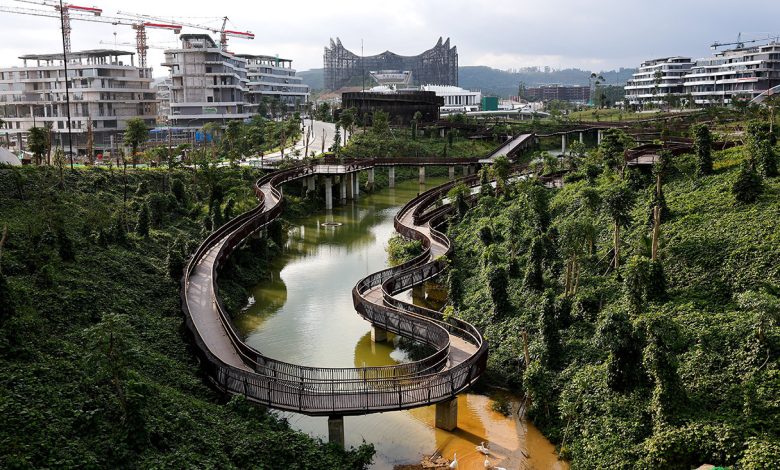
At the edge of the lush rainforests of eastern Borneo, one of Southeast Asia’s most ambitious infrastructure projects is taking shape: the construction of Indonesia’s new capital, Ibu Kota Nusantara (IKN). Set to replace the sinking and congested Jakarta, this visionary city promises to be a beacon of sustainable development and economic decentralization. Yet, amid the excitement and political ambition, a critical concern looms—one that has received far less attention than it deserves. IKN’s location in East Kalimantan places its future residents at the epicenter of a public health hazard: vector-borne diseases, particularly malaria.
The risks are not hypothetical. East Kalimantan is a malaria hotbed, accounting for 85% of malaria cases in Indonesian Borneo, despite having less than a quarter of its population. Even more concerning is the potential presence of Plasmodium knowlesi, a malaria parasite as deadly as the more notorious P. falciparum. Known to thrive in degraded forests, P. knowlesi has been surging in Southeast Asia, spreading through long-tailed macaques and forest-dwelling mosquitoes. If undetected and unmanaged, it could pose a severe health threat to the million-plus people expected to migrate from malaria-free Jakarta to IKN.
The warning signs have been present for years. A 2020 government report acknowledged the abundance of malaria-carrying mosquitoes in the region, yet construction surged ahead. By 2022, cases of malaria among workers at the site were already emerging. While the IKN construction authority has distributed mosquito nets and taken some control measures, experts argue these efforts are insufficient. “It has all the authorities but no capabilities,” says Mirza Buana, a legal scholar at Lambung Mangkurat University. Local health officials, already stretched thin, are left scrambling to monitor and contain the spread of disease.
The real fear, however, is what could go unnoticed. P. knowlesi infections are difficult to diagnose without molecular testing, often mistaken for other forms of malaria. With limited surveillance and resources, cases could be slipping through the cracks. Epidemiologist Henry Surendra of Monash University, Indonesia, warns that without urgent action, moving large numbers of people into a malaria-prone zone is a dangerously naive gamble.
Malaria is not the only concern. Construction work, with its extensive land clearing and water reservoirs, creates ideal breeding grounds for Aedes mosquitoes—the carriers of dengue, Zika, and chikungunya. Last year alone, IKN recorded 650 dengue cases, a troubling indicator of future risks.
Yet, within this challenge lies an opportunity. If Indonesia takes these risks seriously, the development of IKN could serve as a catalyst for nationwide malaria elimination efforts. Enhanced surveillance, environmental monitoring, and proactive health measures could transform this megacity into a model of disease resilience. Urban planner Deden Rukmana believes that with meticulous planning, a city in a malaria-prone area is not just possible—it can thrive. But without it, he warns, “the public will become the victim.”
The grand vision of IKN was meant to redefine Indonesia’s future. Whether it becomes a symbol of progress or a cautionary tale depends on whether its planners are willing to confront the hidden threats beneath its gleaming skyline. The fate of its future residents hangs in the balance.