
Is your wardrobe harming wildlife?
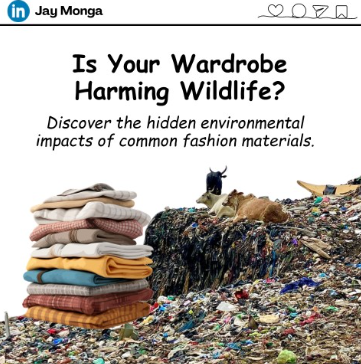
Every morning, you pick out an outfit. But have you ever wondered if your wardrobe choices are silently harming the planet’s wildlife? Beneath the surface of stylish fabrics lies an environmental story—one that connects fashion to deforestation, ocean pollution, and biodiversity loss.
The Fabric of the Problem
Fashion is more than a statement it’s an industry built on materials that often come at a steep cost to nature. From forests cleared for cotton and viscose plantations to microplastics shed from synthetic fibers, the fashion industry is deeply entangled with environmental destruction.
- Cotton: Often seen as a natural and breathable choice, conventional cotton is one of the thirstiest crops in agriculture. It requires vast amounts of water and pesticides, threatening freshwater ecosystems and poisoning wildlife.
- Polyester & Nylon: These synthetic fabrics might be durable, but they are derived from fossil fuels and contribute to microplastic pollution. Every wash releases tiny plastic fibers into waterways, which marine creatures mistake for food.
- Wool & Leather: Animal-based textiles might seem eco-friendly, but they come with hidden costs. Industrial livestock farming contributes to deforestation, methane emissions, and habitat destruction.
- Rayon & Viscose: Often marketed as sustainable alternatives, these plant-based fibers sometimes originate from old-growth forests, leading to habitat loss for endangered species.
A Wildlife Crisis in Your Closet
The impact of fashion stretches far beyond human borders. In the Amazon, forests are cleared for cattle grazing to supply leather industries. Rivers in Asia are polluted with toxic dye runoff, poisoning aquatic life. Coral reefs suffer from microplastic accumulation, disrupting marine food chains. Our choices as consumers ripple across entire ecosystems.
Rethinking Fashion: Solutions for a Wild-Friendly Wardrobe
The good news? Sustainable fashion is on the rise, and every consumer decision can make a difference. Here’s how you can reduce your wardrobe’s impact on wildlife:
- Choose Organic & Regenerative Fabrics: Look for organic cotton, hemp, and linen, which require less water and avoid harmful pesticides.
- Support Ethical & Circular Fashion: Opt for brands that use recycled materials, upcycled designs, and ethical sourcing practices.
- Reduce Synthetic Fiber Use: Minimize polyester-based clothing and use a microfiber filter in your washing machine to trap plastic fibers.
- Go for Longevity Over Trends: Invest in high-quality, timeless pieces that won’t end up in landfills after a single season.
- Explore Alternative Textiles: Innovative materials like Piñatex (pineapple leather) and Tencel (made from sustainably harvested wood pulp) offer eco-friendly choices without harming wildlife.
Fashioning a Better Future
The clothes we wear should not come at the cost of nature’s survival. By making mindful choices, we can transform fashion into a force for good one that respects both human creativity and the delicate balance of our ecosystems.
Next time you pick out an outfit, ask yourself: Is this just fashion, or is it a statement of care for the planet and its wildlife? The power to protect nature is in your hands and in your wardrobe.
source :


