
Net zero whole life carbon for buildings
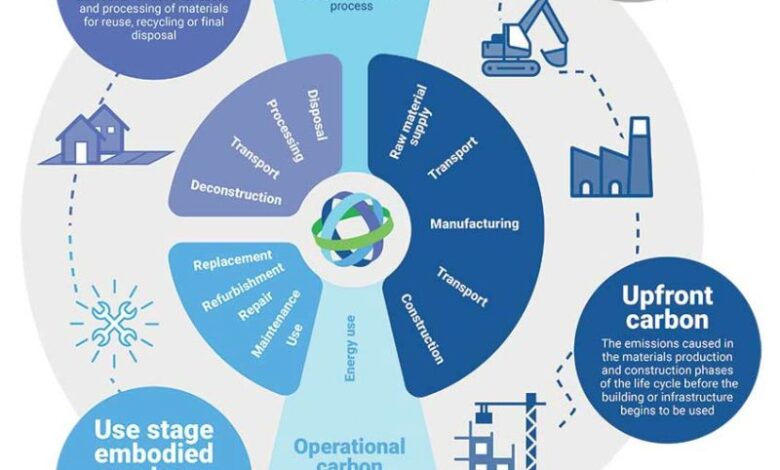
Net Zero Buildings: Beyond Energy Efficiency, A Whole Life Carbon Imperative
The conversation around sustainable buildings has shifted. It’s no longer enough to focus solely on operational energy use; we must tackle Whole Life Carbon the total carbon footprint from a building’s creation to its demolition. Achieving Net Zero requires a drastic, principled reduction in carbon across the entire building lifecycle.
This isn’t just best practice; it’s a mandatory framework for aligning the construction sector with global climate targets.
The Four Pillars of Whole Life Carbon Mastery
A truly sustainable building strategy must follow a clear hierarchy, prioritizing emission reduction before any talk of offsetting. This four-step framework is your guide to creating Net Zero assets:
1. Prevent: The Power of Avoidance
The lowest-carbon building is often the one that’s already standing. Before breaking ground, the first and most critical step is to question necessity:
- Avoid Embodied Carbon: Prioritize strategies that deliver the desired function with minimum material use. This means choosing renovation, repurposing, or densification of existing buildings over new development. By preventing the need for new materials and construction, you eliminate the largest source of upfront carbon.
2. Reduce and Optimise: Designing for Less
Once the need for construction is established, every design choice must be scrutinized through a whole lifecycle lens to minimize upfront emissions.
- Minimise Upfront Impact: Employ lean construction principles to reduce material waste. Select low-carbon materials (e.g., mass timber, low-carbon concrete) and construction processes that minimize GHG emissions. This ensures your initial carbon debt is as small as possible.
3. Plan for the Future: Circularity and Adaptation
A Net Zero building is designed not just for today, but for a circular future. The goal is to avoid future embodied carbon during maintenance, refurbishment, and end-of-life.
- Design for Disassembly: Maximize the potential for renovation, future adaptation, and circularity. Use materials that can be easily recovered, reused, or recycled. This turns a building from a linear liability into a circular material bank.
4. Compensate for Residual Emissions: The Last Resort
Only after rigorously following the first three steps Prevention, Reduction, and Planning should compensation be considered. Offsetting is not a substitute for cutting emissions.
- Offset Residual Upfront Carbon: Only the truly residual upfront embodied carbon emissions should be compensated. This must be done using high-quality, credible compensation activities (e.g., certified carbon removal projects) to ensure the offset represents a genuine, verifiable climate benefit.
The Takeaway: This framework moves the industry past simple energy efficiency. It demands a holistic, lifecycle view where the most valuable carbon strategy is the one that avoids emissions entirely.
source:


