One Use. Centuries of Waste.
One Use. Centuries of Waste.
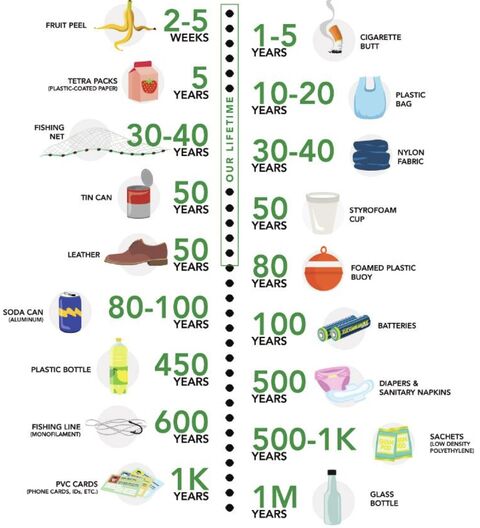
A banana peel disappears in weeks.
A plastic bottle can remain for 450 years.
A glass bottle may stay on Earth for one million years.
That contrast defines the challenge of today’s linear economy.
Many everyday products are designed for minutes of convenience, yet remain in ecosystems for generations. What is discarded does not disappear — it accumulates in landfills, rivers, oceans, and food systems.
A plastic bag used briefly can pollute the environment for decades.
A cigarette butt can release toxic chemicals into soil and waterways for years.
Fishing lines, sachets, and single-use plastics continue harming wildlife long after disposal.
The issue is not only waste.
It is design.
The current system often prioritizes short-term consumption over long-term responsibility. Circular economy principles challenge that model by rethinking how products are made, used, reused, and recovered.
♻️ Designing products for durability and reuse
♻️ Reducing unnecessary packaging and plastics
♻️ Building systems for repair, refill, and recovery
♻️ Keeping materials in circulation for longer
♻️ Preventing waste before it is created
Sustainability is not only about emissions and climate targets.
It is also about what remains behind after consumption ends.
One important question belongs at the center of every product decision:
Will this item outlive its purpose — and damage the planet in the process?
The future economy must be designed around regeneration, not disposal.