
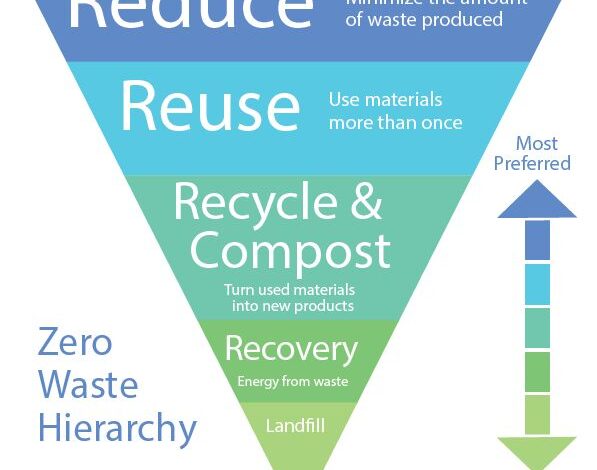
Reduce, reuse, recycle & compost, recovery, landfill
Rethinking Our Relationship with Waste: The Zero Waste Mindset
For too long, we’ve been conditioned to see recycling as the ultimate answer to our waste problem. The simple act of sorting a plastic bottle or an aluminum can into a designated bin felt like a responsible step toward a greener planet. But this perspective, while well-intentioned, is fundamentally flawed. Recycling is not the starting point of our eco-journey; it’s one of the final stops. The real power lies in a complete mindset shift—moving from a recycling-first approach to a zero-waste one.
The Zero Waste Hierarchy: A New Way to Think
The zero-waste hierarchy isn’t just a list of actions; it’s a guide to living more intentionally. It flips our traditional thinking on its head, urging us to prevent waste before it’s even created.
- Reduce: This is the most crucial and impactful step. The less we consume, the less we discard. It’s about consciously choosing to buy only what we need, prioritizing quality over quantity, and opting for products with minimal or no packaging. Saying “no” to that free plastic bag or unnecessary wrapping is a small act with a big ripple effect.
- Reuse: Before you toss something, ask yourself if it can be given a second life. Can that glass jar be used for food storage? Can old clothes be donated or repurposed into cleaning rags? Every item we reuse delays its journey to the landfill, conserving the energy and resources that would have been used to produce a new one.
- Recycle & Compost: While these are still vital, they are not the first line of defense. They are what we turn to when reducing and reusing aren’t possible. Composting turns organic waste like food scraps—into nutrient-rich soil, and recycling transforms materials into new products. Both processes, however, require energy and resources, which is why they come after reduction and reuse.
- Recovery & Landfill: At the bottom of the hierarchy are the last resorts. Recovery involves converting non-recyclable waste into energy, while the landfill is the final destination for anything that cannot be processed by other means. The goal is to make these steps as obsolete as possible.
Shifting Our Habits, Changing Our World
The true power of this hierarchy is its ability to change our perspective. Instead of asking, “How do I get rid of this?”, we start asking, “How do I prevent this waste from existing in the first place?“
Imagine the collective impact if we all embraced these small but mighty changes: carrying a reusable water bottle, bringing a coffee mug to the cafe, composting kitchen scraps, or supporting businesses that champion sustainable practices. These actions, when multiplied across a community, a city, or a country, add up to monumental change.
Let’s move beyond the comfortable, but limited, idea of recycling as our primary solution. The real heroes of this story are the everyday acts of reducing and reusing. The future of our planet depends on us shifting our mindset from managing waste to eliminating it.
source:


