
Rethinking Urban Parking: When Infrastructure Becomes Green Space
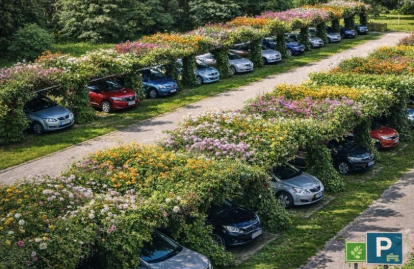
Urban areas around the world struggle with two growing challenges: limited land availability and declining urban green cover. At the same time, cities continue to allocate vast areas for car parking infrastructure, which often remains underutilized or environmentally inefficient.
An innovative approach seen in some parts of Japan demonstrates how parking infrastructure can be reimagined as multifunctional urban space.
Instead of conventional concrete car parks, structures are designed with living green roofs made of flowering plants and vegetation. These natural canopies provide shade for parked vehicles while transforming otherwise sterile parking areas into mini urban gardens.
This concept offers several urban planning and environmental benefits:
Urban Heat Reduction
Vegetated roofs help reduce the urban heat island effect by lowering surface temperatures compared to concrete or asphalt.
Improved Stormwater Management
Green roofs absorb rainfall, reducing runoff and pressure on urban drainage systems.
Biodiversity Support
Even small-scale green infrastructure can create micro-habitats for insects, birds, and pollinators.
Better Urban Aesthetics
Parking areas are typically visually unattractive. Integrating vegetation improves the urban landscape and user experience.
Efficient Land Use
Cities do not always have extra land for parks. Transforming existing infrastructure into dual-purpose spaces maximizes land efficiency.
For rapidly urbanizing regions in Asia and developing countries, such ideas highlight the importance of integrating green infrastructure into everyday urban systems rather than treating sustainability as an afterthought.
Urban planners, architects, and policymakers should start asking a simple question:
Can every piece of urban infrastructure serve more than one function?
Parking structures, rooftops, transport corridors, and public utilities all hold potential to contribute to climate resilience and urban livability.
Sustainable cities will not emerge from grand projects alone. Often, they begin with small but intelligent design decisions that reconnect infrastructure with nature.
The future of urban planning lies not in choosing between development and nature, but in designing systems where both coexist.


