Ten Major Differences between Climate Mitigation and Climate Adaptation
1️⃣Definition:
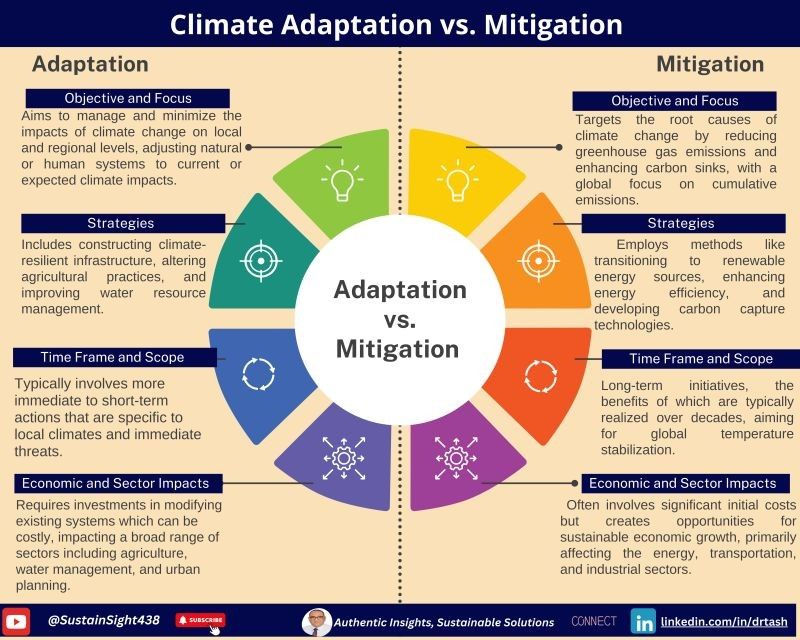
Climate Mitigation: Actions to reduce or prevent the emission of GHG into the atmosphere to curb global warming .
Climate Adaptation: Adjustments in natural or human systems in response to actual or expected climatic effects, which moderate harm or exploit beneficial opportunities.
2️⃣Objective:
Mitigation: Aims to address the causes of climate change by reducing GHG emissions and enhancing sinks.
Adaptation: Aims to manage the impacts of climate change on various systems.
3️⃣Focus:
Mitigation: Focused on global scale efforts as climate change is a global phenomenon influenced by the cumulative effect of GHG.
Adaptation: Often focused at the local or regional level, tailored to specific impacts experienced or expected in that area.
4️⃣Time Frame:
Mitigation: Long-term strategy, with benefits realized over decades or even centuries.
Adaptation: Can be immediate to short-term, addressing current and anticipated needs.
5️⃣Strategies:
Mitigation: Includes transitioning to renewable energy, enhancing energy efficiency, reforestation, and developing new technologies like CCUS.
Adaptation: Involves constructing flood defenses, climate-proofing infrastructure, altering agricultural practices, and improving water management.
6️⃣Sector Engagement:
Mitigation: Requires engagement from sectors directly impacted by fossil fuel use and land use changes.
Adaptation: Involves sectors including water, health, and urban planning to ensure resilience against climate impacts.
7️⃣Dependency on Science and Technology:
Mitigation: dependent on technological advances to reduce emissions and increase energy efficiency.
Adaptation: Relies more on local knowledge and engineering solutions appropriate to specific climatic threats.
8️⃣Economic Implications:
Mitigation: Involves upfront costs for long-term gain, disrupting existing economic structures but offering opportunities for green growth.
Adaptation: Requires investment to alter existing infrastructure, which can be costly, but is crucial to avoid future expenses due to unmanaged impacts.
9️⃣Policy Integration:
Mitigation: Integrated at the international level through agreements like the Paris Agreement, with national policies supporting these goals.
Adaptation: policies integrated into local governance , requiring alignment with national strategies that may vary between countries.
🔟Outcome Measurement:
Mitigation: Success is measured by reductions in GHG concentrations in the atmosphere and stabilization of temperature.
Adaptation: Success is measured by reduced vulnerability and increased resilience of communities to climate impacts.
Tagar#climatechange Tagar#energy
__________
♻️ Find this post useful? Feel free to share it with your network 📣
👉Follow Sustainability Infographics 📊 to learn from the industry’s best visuals.
Source: