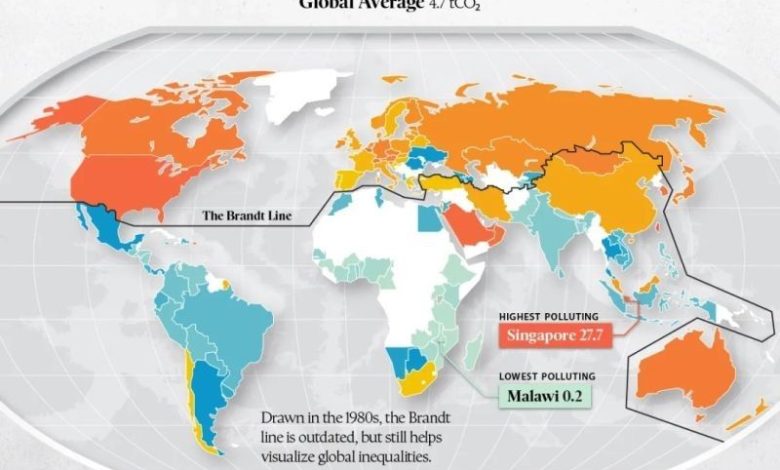
Countries that pollute more or less than the global average
Indonesia’s urban transformation is reshaping its future. Over the past four decades, cities have expanded rapidly, pulling millions from rural areas into bustling urban centers. But as skyscrapers rise and industries flourish, so do the challenges climate risks, resource consumption, and the question of who truly bears the weight of emissions.
A Nation on the Move: The Shift from Rural to Urban
For much of its history, Indonesia’s population was predominantly rural. Villages thrived, agriculture flourished, and city life was reserved for a select few. That dynamic began to change in the 1980s, as urbanization picked up pace. By 2011, a historic milestone was reached: for the first time, more Indonesians lived in cities than in the countryside.
This shift isn’t slowing down. Urban populations are projected to keep growing, fueled by economic opportunities, infrastructure expansion, and migration. But while cities promise prosperity, they also bring new pressures—on housing, transportation, and, crucially, carbon emissions.
The Global Carbon Divide: Who Consumes, Who Pollutes?
Zooming out from Indonesia, a stark global pattern emerges. Some countries emit far more per capita than others, and it’s not always the ones you’d expect. The map below visualizes nations that exceed the global average of 4.7 tCO₂ per person (in red) and those that fall below (in blue).
But here’s the twist: many of the highest emitters don’t actually manufacture the goods driving their consumption. Instead, emissions are often outsourced to countries with large industrial sectors. This is where consumption-based carbon accounting changes the narrative.
What Are “Consumption-Based” Emissions?
Rather than attributing emissions to where products are made, this metric tracks where they are ultimately consumed. That means:
- A consumer in the U.S. or Europe purchasing a product made in Indonesia or China still contributes to emissions, even if they aren’t produced locally.
- The industrialized Global North benefits from the goods and services of the Global South, while the carbon footprint is recorded elsewhere.
- Many developing nations bear the environmental burden of production but reap fewer financial rewards.
The North-South Divide: A Climate Inequality
First coined in the 1980s, the terms Global North and Global South describe the economic divide between industrialized and developing nations. But in the context of climate change, the division becomes even more profound.
- The Global North: Wealthier, high-consuming nations drive emissions and enjoy economic prosperity.
- The Global South: Developing countries often have lower per capita emissions yet bear the brunt of climate disasters—rising sea levels, extreme weather, and resource scarcity.
Indonesia sits at the crossroads of this divide. It is urbanizing fast, industrializing even faster, and yet remains highly vulnerable to climate impacts. Jakarta, built just 8 meters above sea level, is sinking. The country is investing in a $33 billion new capital to mitigate risks. But the question remains: who should pay for adaptation and resilience?
Urbanization, Carbon, and the Future
Indonesia’s story isn’t just one of urban expansion it’s part of a larger global system of consumption, production, and environmental responsibility. Cities will continue to grow, economies will continue to evolve, and emissions will continue to be debated.
The challenge is not just reducing emissions but ensuring a just transition one where the burdens and benefits of development are shared equitably. As Indonesia moves forward, it must balance economic ambition with sustainability, growth with resilience, and urban expansion with environmental justice.
Because urbanization isn’t just about building cities it’s about shaping the future. And in a warming world, that future depends on the choices we make today.
source :