The ABCs of green buildings
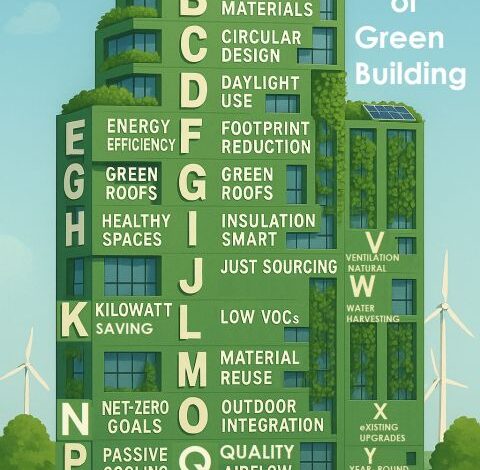
The ABCs of Green Buildings: A Framework for High-Performance Architecture
A truly sustainable building is far more than a collection of eco-friendly add-ons like solar panels or living walls. It represents an integrated design philosophy where every architectural choices from site orientation to material selection simultaneously minimizes ecological footprint and enhances human well-being.
Core Pillars of Sustainable Building Design
1. Passive Design & Architectural Optimization
- Daylight Optimization: Positioning structures and window systems to maximize natural light reduces artificial lighting electricity demands by up to 30–40% while regulating human circadian rhythms.
- Thermal Envelope & Passive Heating/Cooling: Utilizing high-performance insulation, double- or triple-glazed windows, and strategic shading minimizes thermal bridging and drastically cuts HVAC operational loads.
2. Energy Efficiency & Renewable Integration
- Decades of Operational Savings: High-efficiency HVAC, smart LED lighting, and automated building management systems (BMS) drive down long-term operating costs.
- On-Site Renewable Energy: Integrating solar photovoltaics (PV) and geothermal heat pumps transitions buildings from net energy consumers to self-sustaining or grid-supportive assets.
3. Nature-Based Solutions & Urban Resilience
- Green Roofs & Urban Greening: Vegetated roofs mitigate the urban heat island effect, foster local biodiversity, and provide natural thermal insulation.
- Stormwater Management: Permeable surfaces and bio-retention basins absorb runoff on-site, easing pressure on municipal drainage infrastructure.
4. Circular Water Systems
- Rainwater Harvesting & Graywater Recycling: Capturing rainfall and treating wastewater from sinks and showers for irrigation or toilet flushing reduces municipal potable water demand by up to 50%.
Key Principles: From Conventional to Net-Zero Design
| Design Element | Conventional Approach | Green Building Approach |
| Energy Source | Grid fossil fuels | On-site renewables + smart microgrids |
| Water Usage | Single-use municipal water | Closed-loop harvesting & graywater reuse |
| Indoor Environmental Quality (IEQ) | Sealed spaces with artificial ventilation | Natural ventilation + low-VOC non-toxic materials |
| Material Lifecycle | High embodied carbon (traditional concrete/steel) | Recycled, bio-based (mass timber), or locally sourced materials |
The Fundamental Takeaway
Sustainability in construction is rarely achieved through a single breakthrough technology. Instead, it is the cumulative result of hundreds of deliberate design choices working in synergy.
As global urbanization accelerates, sustainable construction shifts the paradigm from simply building more to building better delivering assets that consume fewer resources, eliminate operational carbon, and cultivate healthier communities for generations to come.
source:
https://www.linkedin.com/feed/update/urn:li:activity:7486333969605697537/