The environmental impact of generative AI
The AI Energy Paradox: Trading Intelligence for Emissions and Water
The roar of the generative AI boom is drowning out a vital signal: the catastrophic environmental footprint of unprecedented computational growth. We are witnessing an exponential expansion of intelligence, but it is coming at a staggering, often obscured, cost to the planet.
The innovation cycle must be challenged: Is the promise of AI worth the hidden price of its consumption?
The Hidden Toll of the AI Engine
The scale of AI’s environmental burden the “Joule Gap” is already alarming, as highlighted by data from Akepa:
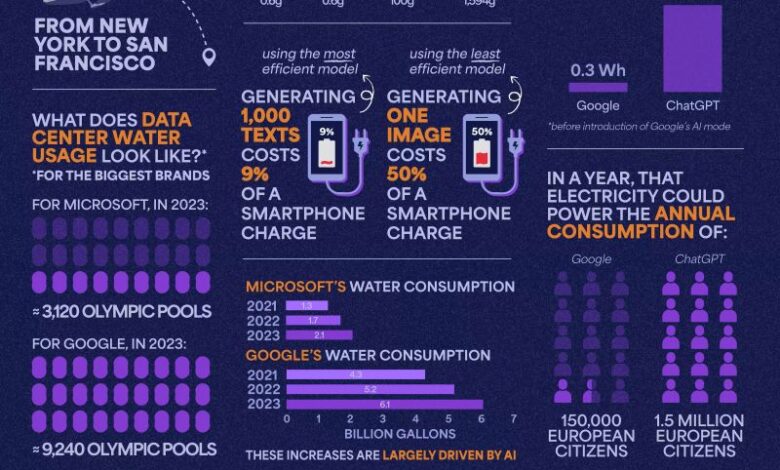
- The Power Drain: A single interaction with a generative model like ChatGPT consumes nearly 10 times more electricity than a standard Google search. This difference multiplies across billions of daily queries, creating immense strain on energy grids.
- The Cost of Creation: The training of GPT-3 alone released CO₂ emissions equivalent to approximately 300 round-trip flights between New York and San Francisco. Building foundational models is a massive, carbon-intensive infrastructure project.
- The Thirst for Data: Beyond energy, the cooling of vast data centers requires water. One typical AI conversation can consume up to half a liter of precious freshwater for cooling processes, exacerbating regional water scarcity.
The Crucial Question: Is the Juice Worth the Squeeze?
The narrative often shifts to AI’s potential to solve climate change (e.g., optimizing grids, modeling climate risks). However, this potential is meaningless if the technology’s own footprint negates its benefits.
The big, unanswered question is one of systemic accountability:
Which precise portion of AI expansion is truly dedicated to decarbonizing the economy, and does that benefit outweigh the emissions and resource depletion required to run the vast training and inference infrastructure?
The conversation must move beyond mere carbon emissions. We need to measure the AI industry’s total impact on water usage, mineral extraction for hardware, and the end-of-life e-waste crisis generated by rapidly obsolete GPUs.
The Mandate for Sustainable AI
The future of AI cannot be built on an unsustainable foundation. We must demand immediate transparency and action:
- Mandatory Disclosures: Tech leaders must publish clear, audited data on the energy, water, and carbon intensity of their models (training and inference).
- Efficiency First: We need a radical shift toward developing “green AI” models designed for computational and resource efficiency, not just raw performance.
- Climate-Aligned ROI: Every major AI investment must be justified not only by profit but by a proven, net-positive contribution to climate mitigation, ensuring expansion serves purpose, not just consumption.
The time for hand waving optimism is over. We must force the AI revolution to confront its own climate reality before the digital intelligence we create consumes the resources vital for human survival.