
The GHG Protocol
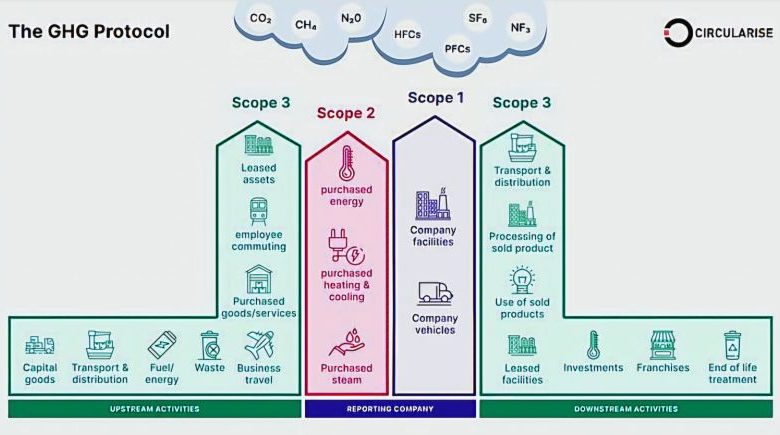
When it comes to carbon emissions, businesses must look beyond what’s directly in front of them. Greenhouse gas (GHG) emissions are categorized into 𝗦𝗰𝗼𝗽𝗲 𝟭, 𝗦𝗰𝗼𝗽𝗲 𝟮, 𝗮𝗻𝗱 𝗦𝗰𝗼𝗽𝗲 𝟯, each representing different sources of environmental impact. While Scope 1 covers direct emissions from owned operations, Scope 2 accounts for indirect emissions from purchased energy, and Scope 3 the most tricky and complex includes all other indirect emissions across the supply chain. Understanding and managing all three is crucial for achieving real sustainability and net-zero goals.
⚡️𝗖𝗮𝗿𝗯𝗼𝗻 𝗲𝗺𝗶𝘀𝘀𝗶𝗼𝗻𝘀 𝗮𝗿𝗲𝗻’𝘁 𝗷𝘂𝘀𝘁 𝗮𝗯𝗼𝘂𝘁 𝗱𝗶𝗿𝗲𝗰𝘁 𝗳𝘂𝗲𝗹 𝘂𝘀𝗲; 𝘁𝗵𝗲𝘆 𝘀𝗽𝗮𝗻 𝗮𝗰𝗿𝗼𝘀𝘀 𝗮𝗻 𝗼𝗿𝗴𝗮𝗻𝗶𝘇𝗮𝘁𝗶𝗼𝗻’𝘀 𝗲𝗻𝘁𝗶𝗿𝗲 𝘃𝗮𝗹𝘂𝗲 𝗰𝗵𝗮𝗶𝗻:
✅ 𝗦𝗰𝗼𝗽𝗲 𝟭: Direct emissions from owned or controlled sources (𝐞.𝐠., 𝐜𝐨𝐦𝐩𝐚𝐧𝐲 𝐭𝐫𝐮𝐜𝐤𝐬 𝐛𝐮𝐫𝐧𝐢𝐧𝐠 𝐟𝐮𝐞𝐥)
✅ 𝗦𝗰𝗼𝗽𝗲 𝟮: Indirect emissions from purchased electricity, heating, or cooling (𝐞.𝐠., 𝐨𝐟𝐟𝐢𝐜𝐞 𝐞𝐥𝐞𝐜𝐭𝐫𝐢𝐜𝐢𝐭𝐲 𝐟𝐫𝐨𝐦 𝐟𝐨𝐬𝐬𝐢𝐥-𝐟𝐮𝐞𝐥-𝐩𝐨𝐰𝐞𝐫𝐞𝐝 𝐠𝐫𝐢𝐝𝐬)
✅ 𝗦𝗰𝗼𝗽𝗲 𝟯: The biggest challenge is indirect emissions from the entire supply chain, from raw materials to product disposal (𝐞.𝐠., 𝐬𝐮𝐩𝐩𝐥𝐢𝐞𝐫 𝐦𝐚𝐧𝐮𝐟𝐚𝐜𝐭𝐮𝐫𝐢𝐧𝐠 𝐞𝐦𝐢𝐬𝐬𝐢𝐨𝐧𝐬)
⚡️𝗪𝗵𝘆 𝗶𝘁 𝗺𝗮𝘁𝘁𝗲𝗿𝘀? 𝗠𝗲𝗮𝘀𝘂𝗿𝗶𝗻𝗴 𝗮𝗹𝗹 𝘁𝗵𝗿𝗲𝗲 𝘀𝗰𝗼𝗽𝗲𝘀 𝗶𝘀 𝗰𝗿𝘂𝗰𝗶𝗮𝗹 𝗳𝗼𝗿 𝘀𝗲𝘁𝘁𝗶𝗻𝗴 𝗿𝗲𝗮𝗹 𝘀𝘂𝘀𝘁𝗮𝗶𝗻𝗮𝗯𝗶𝗹𝗶𝘁𝘆 𝗴𝗼𝗮𝗹𝘀 𝗮𝗻𝗱 𝗮𝗰𝗵𝗶𝗲𝘃𝗶𝗻𝗴 𝗻𝗲𝘁-𝘇𝗲𝗿𝗼 𝗰𝗼𝗺𝗺𝗶𝘁𝗺𝗲𝗻𝘁𝘀.
⚡️𝗛𝗼𝘄 𝘁𝗼 𝗮𝗰𝘁?
✔️ Reduce Scope 1 by optimizing operations and switching to cleaner fuels.
✔️ Cut Scope 2 by transitioning to renewable energy.
✔️ Manage Scope 3 by engaging suppliers, improving efficiency, and promoting circular economy practices.
Source:
https://www.linkedin.com/feed/update/urn:li:activity:7307953093827051520


