The global plastics treaty: What is the role of bio-based plastic,biodegradable plastic and bioplastic? (possible core obligation 8)
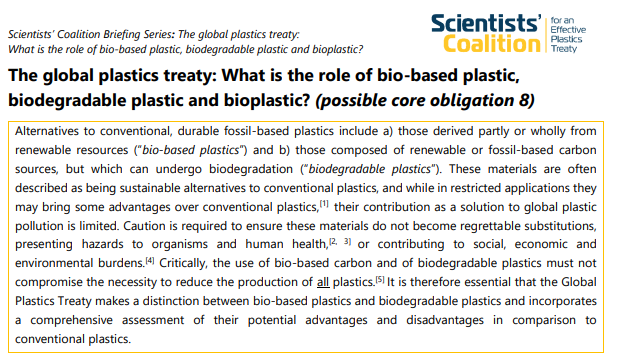
Alternatives to conventional, durable fossil-based plastics include a) those derived partly or wholly from
renewable resources (“bio-based plastics”) and b) those composed of renewable or fossil-based carbon
sources, but which can undergo biodegradation (“biodegradable plastics”). These materials are often
described as being sustainable alternatives to conventional plastics, and while in restricted applications they may bring some advantages over conventional plastics,[1] their contribution as a solution to global plastic pollution is limited. Caution is required to ensure these materials do not become regrettable substitutions, presenting hazards to organisms and human health,[2, 3] or contributing to social, economic and environmental burdens.[4] Critically, the use of bio-based carbon and of biodegradable plastics must not compromise the necessity to reduce the production of all plastics.[5] It is therefore essential that the Global Plastics Treaty makes a distinction between bio-based plastics and biodegradable plastics and incorporates a comprehensive assessment of their potential advantages and disadvantages in comparison to conventional plastics.
source :