The role of scope 4 emissions in the future of carbon accounting
Beyond the Supply Chain: Why Scope 4 Emissions Matter in the Climate Fight
When we talk about carbon footprints, most conversations revolve around the usual suspects: manufacturing, transportation, electricity use the tangible stuff. But what if we told you that some of the biggest climate wins don’t come from what a company produces, but from how its products are used? Welcome to the evolving world of Scope 4 emissions the next frontier in corporate climate action.
So, What Exactly Are Scope 4 Emissions?
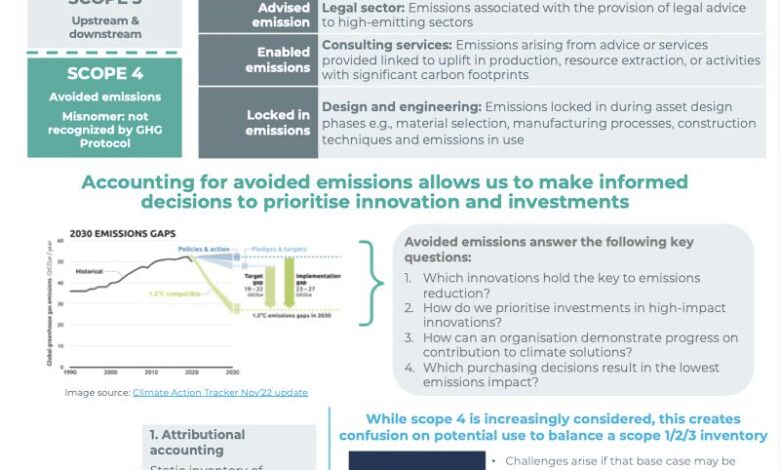
While many are now familiar with Scope 1, 2, and 3 emissions which cover everything from on-site fuel use to emissions across a company’s supply chain Scope 4 emissions take a different approach. They’re not just about what your company emits, or even what your suppliers or logistics partners emit. Instead, Scope 4 looks at the ripple effect of your products and services after they leave your hands.
Specifically, Scope 4 refers to emissions avoided by the use of your products. It’s about the downstream impact: emissions that don’t happen because someone used a product that helps them be more energy efficient, or because your service enabled a more sustainable lifestyle.
Let’s break that down with an example:
A company that sells LED light bulbs counts the manufacturing and shipping of those bulbs under Scope 3. But if those bulbs help consumers cut electricity use and reduce emissions that’s Scope 4: avoided emissions thanks to a smarter product.
Why It Matters Now More Than Ever
As climate change accelerates, companies are under pressure not just to reduce their own emissions, but to actively be part of the solution. Scope 4 is a powerful tool to show how businesses can enable emission reductions beyond their immediate operations.
Think of:
- Energy-saving home upgrades that reduce household emissions
- Telecommuting platforms that cut down daily commuting
- Products designed for a circular economy that eliminate waste before it’s created
These aren’t just good for the planet they’re brand-defining moves. Scope 4 helps tell that story with numbers.
Real-World Scope 4 in Action
- A tech company enabling remote work sees reductions in transport-related emission.
- A manufacturer of recyclable packaging helps clients avoid landfill emissions.
- A software provider optimizes delivery routes and helps reduce fuel use
Each of these impacts might fall outside traditional carbon accounting boundaries, but they are no less real. In fact, they’re critical.
The Challenges (and Opportunities)
Yes Scope 4 emissions are harder to measure. They’re often based on assumptions, user behavior, or modeling scenarios. But complexity shouldn’t be a barrier to progress.
By embracing Scope 4 accounting, companies can:
- Prove their positive environmental influence
- Uncover new business value in sustainability
- Lead in transparency and accountability
- Inspire product innovation rooted in real-world impact
In Conclusion: Going Beyond the Checklist
Scope 4 isn’t just another box to tick it’s a mindset shift. It asks companies not only what are we emitting? but how are we helping the world emit less? And in the race against climate change, that shift from impact reduction to impact enablement could be one of the most powerful stories a business can tell.
source: