Towards a Climate-Resilient Singapore
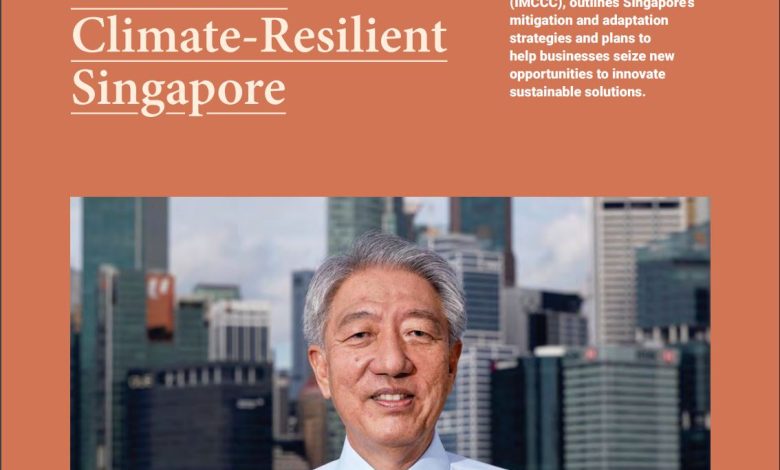
Singapore, as a small island nation, faces an asymmetrical challenge. On one hand, our impact on global emissions is small. On the other hand, the effects of climate change on us are disproportionately large and existential. Being a low-lying island, Singapore is particularly vulnerable to rising sea levels. Climate change will lead to more frequent episodes of extreme weather and disrupt our access to essential food, water, and energy sources.
If COVID-19 was a black swan event that changed the way we live within a short period, then climate change is a “slow boil” challenge that will disrupt our lives even more in the long term. This is why our climate policy is being coordinated as a whole-of-nation issue under the Prime Minister’s Office. The IMCCC formulates and monitors our national plans to reduce emissions and adapt to the consequences of climate change.
Key Policy Goals and Major Changes
In 2015, we set the target of our Nationally Determined Contribution (NDC) to the Paris Agreement to reduce our emissions intensity—or greenhouse gas emissions per dollar of GDP—by 36% from 2005 levels by 2030, and for our total emissions to peak around 2030. We are on track to meet this commitment. Earlier this year, we enhanced our NDC by committing to an absolute peak emission level of 65 million tons of carbon dioxide equivalent around 2030. We also announced our Long-Term Low-Emissions Development Strategy (LEDS), which aims to halve our emissions from their peak to 33 million tons of carbon dioxide equivalent by 2050 and achieve net zero emissions in the second half of this century.
Mitigation Strategy
Our mitigation strategy has three main thrusts:
- Transformations in Industry, Economy, and Society: Every sector must make significant efforts to limit emissions for Singapore to move towards becoming a low-carbon nation, with new enterprises and growth areas such as the digital economy.
- Nascent Technologies: We must draw on emerging technologies such as carbon capture, utilization and storage, and low-carbon fuels.
- International Collaboration: We need to work together with other nations in areas like carbon markets and regional electricity grids.
Source:
https://www.clc.gov.sg/docs/default-source/urban-solutions/urbsol17pdf/02_interview_teocheehean.pdf