Turning Indonesia’s Electric Bus Roadmap into Action
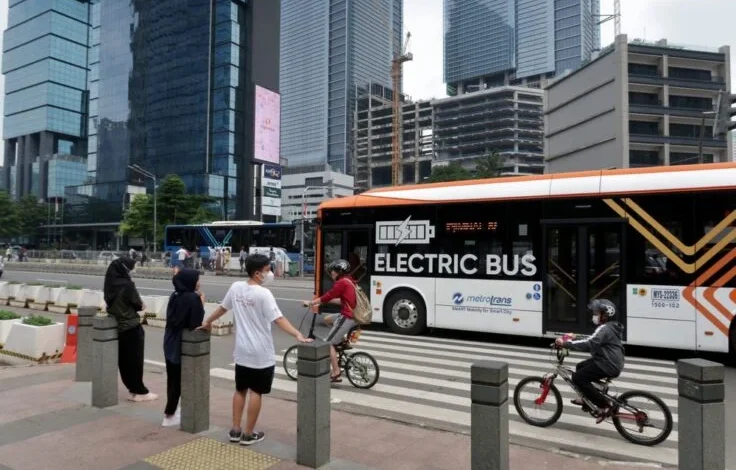
Early results of trials in Jakarta have been encouraging. By 2024, the operating costs per-kilometer for Transjakarta’s e-buses were already 5% lower than those of conventional diesel fleets, confirming ITDP Indonesia’s projections in 2022. Although the upfront investment is still higher, lower operating and maintenance costs make e-buses cheaper over time. With the same subsidy budget, Jakarta is now able to operate more e-buses while also extending services to many more users.
Building Out a National Roadmap
Leveraging Jakarta’s momentum, ITDP Indonesia, with support from the regional climate foundation ViriyaENB, launched a multiyear project to assess urban bus electrification. The first year (2023–2024) focused on developing a national roadmap and incentive program. ITDP Indonesia analyzed 98 cities across the country, considering their readiness and urgency to have a properly electrified public transport system. Based on this analysis, 11 priority cities were identified as the most strategic places to advance electrification in the next few years.
The roadmap recommended that these 11 cities achieve 100% electrification of their public bus fleets by 2030. This would serve as a major stepping stone toward the broader national target of 90% urban transport electrification by 2030. The logic is straightforward: concentrating resources and policy support on priority cities first will create momentum, generate lessons, and lay the groundwork for wider replication. Bus electrification in these 11 cities can also effectively reduce greenhouse gas (GHG) emissions by 24% by 2030, equivalent to approximately 900,000 tons of CO2, or the same as planting 3.6 million trees that grow for a decade.
Watch this ITDP webinar for more details on implementing electric bus fleets.
The second year of the project investigated three other Indonesian cities: Surabaya, Pekanbaru, and Surakarta, testing ITDP Indonesia’s roadmap at a local scale. Each city developed a more detailed electrification plan, assessing technical requirements, fiscal readiness, and policy gaps. The findings highlighted a stark contrast. Jakarta, supported by binding regulations, has a stronger legal foundation and a more explicit commitment to full electrification by 2030. Other cities, however, still face challenges like weak local regulations, limited fiscal capacity, and a lack of clarity regarding central government support. Considering these challenges, full electrification in places like Surabaya, Pekanbaru, and Surakarta may potentially be delayed over the next decade.
Barriers to Scaling E-Bus Progress
From these explorations, it is evident that what is holding Indonesia back is not the absence of vision, but the lack of supporting structures for electrification. National targets remain voluntary and lack robust regulations. Local governments, meanwhile, struggle to find the fiscal capacity to purchase new fleets or invest in charging infrastructure. This gap in legal and financial certainty leaves many operators hesitant to transition.
Programs that were once intended to provide reliable central government support, such as operational funding for contracted bus services, have been reduced. This further leaves cities concerned about how to cover ongoing costs, even for traditional diesel buses. Above all, the challenge is one of coordination. The national government, local governments, and industry players are not yet moving in lockstep. Without more substantial alignment, cities are left to interpret and implement electrification on their own terms, which can slow down collective progress.
Action Items for 2030
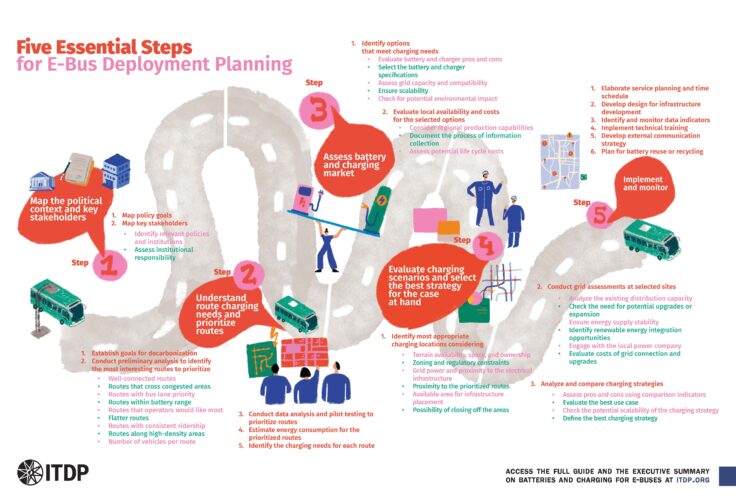
The coming five years are decisive. To turn the electrification roadmap into reality, four broad areas of action will matter most:
- Building a National Legal Backbone and Clear Targets: A clear and binding regulation is needed to provide industry players, cities, and operators with the confidence to establish electrification targets, define responsibilities, and ensure a smooth implementation process. These rules should be realistic, striking a balance between ambition and the varying levels of readiness across Indonesia’s cities.
- Creating Incentives and Support Mechanisms: Operators and cities will only act if the economics make sense. A structured mix of purchase support, concessional financing, and operational subsidies, adapted from the international practices, would create a stronger business case for adoption.
- Strengthening Cities’ Capacity and Ecosystem: Targets are not enough. Cities need training, technical tools, and regulatory templates to plan effectively. At the same time, a broader ecosystem must be built by linking operators, manufacturers, and regulators into a coherent framework.
- Expanding Financing Options: Government subsidies will not be enough on their own. Over the next five years, Indonesia should explore green bonds, climate finance, and long-term contracts that give private operators the confidence to invest. Local government enterprises can also play a role in anchoring these new financial arrangements.
Indonesia is not starting from scratch. A national roadmap exists, lessons from local pilots are emerging, and awareness among cities is growing. What is missing is decisive national action to provide the legal foundation, incentives, and ecosystem support to match the country’s ambition. The role of the Indonesian government is vital, as it involves setting consistent targets and providing fiscal and non-fiscal incentives for operators, manufacturers, and local officials so that e-buses are seen as viable long-term solutions.
Without these actions, e-bus programs risk remaining expensive and unsustainable pilots, especially when most passengers simply want to prioritize reliable, high-quality service over vehicle technology. The next five years will be a critical window. Four broad areas must be advanced in parallel: building a binding national regulation; creating substantial incentives for cities and operators; strengthening local capacity and planning; and expanding financing beyond subsidies. ITDP Indonesia’s ongoing work will contribute to these priorities, as the focus moves to supporting the establishment of national legal anchors with the realistic targets needed for scale.
https://itdp.org/2026/06/08/indonesia-electric-bus-roadmap-into-action-stmagazine-37/