
Understanding climate physical risks: a call to action for resilience
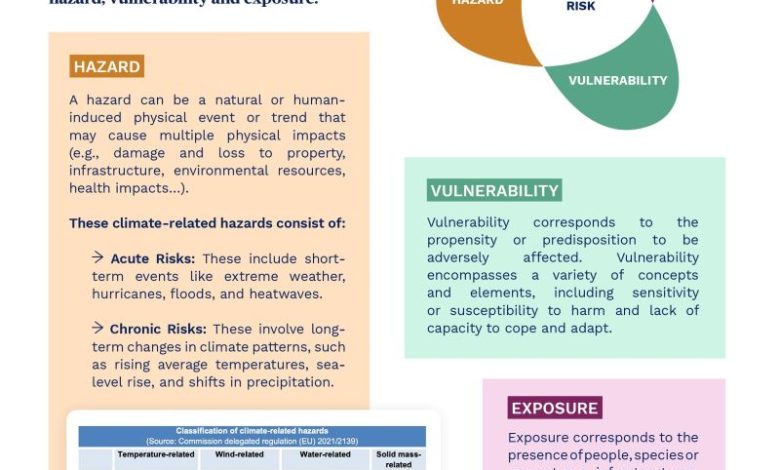
In a world increasingly shaped by the forces of climate change, understanding and addressing climate physical risks is no longer optional—it is imperative. These risks, as defined by the Intergovernmental Panel on Climate Change (IPCC), hinge on the dynamic interplay of three pillars: hazard, exposure, and vulnerability. Each represents a critical lens through which we must assess our readiness to confront and adapt to the challenges ahead.
But this isn’t just about technical definitions or compliance. It’s about survival, sustainability, and the choices we make to protect the people, places, and ecosystems that matter most.
The First Pillar: Hazards—The Threats We Face
Imagine a storm brewing on the horizon. A hurricane, relentless and unforgiving, crashes into the coastline, uprooting lives and infrastructure. Or consider the slow but unyielding rise of the sea, encroaching on coastal communities day by day. These hazards—whether acute disasters like floods or chronic shifts like changing precipitation patterns—are the physical manifestations of our climate crisis.
Identifying and categorizing these hazards isn’t just an academic exercise. It’s the first step in understanding their power to disrupt and destroy. With clarity about what we face, we can begin to plan—not reactively, but proactively.
The Second Pillar: Exposure—What’s at Stake
The next question is: What is in harm’s way?
From bridges and roads to forests and farms, exposure measures the presence of assets—natural, social, and built—in areas vulnerable to climate hazards.
This is where data becomes our ally. By mapping infrastructure, ecosystems, and populations against known risks, we unlock the ability to pinpoint vulnerabilities and target resources effectively. It’s not just about where things are but also their value and interconnectedness. After all, a single port can be the lifeline for an entire region, and a single forest can be the lungs of a continent.
The Third Pillar: Vulnerability—Our Weak Points
Finally, the story comes down to vulnerability: the susceptibility of systems to harm and their capacity to adapt or recover. This pillar delves into more than just physical weaknesses; it reveals systemic inequities.
For example, a well-built factory in a floodplain might endure a deluge, but the workers commuting on damaged roads may not reach it. A coastal town with resilient infrastructure may still falter if its residents lack access to recovery funds. Vulnerability asks us to look beyond the obvious and into the deeper, more human impacts of climate risk.
By understanding sensitivity and available resources, we can prioritize interventions where they matter most—whether by strengthening infrastructure, safeguarding livelihoods, or building social resilience.
Why These Pillars Matter: Building Resilience for Tomorrow
When combined, these three pillars—hazard, exposure, and vulnerability—offer more than just a framework; they provide a roadmap for action. They compel businesses, communities, and policymakers to look at the full picture, aligning decisions with long-term sustainability goals.
Incorporating this holistic perspective into risk assessments does more than enhance compliance with frameworks like the Corporate Sustainability Reporting Directive (CSRD). It equips us with the tools to face a turbulent future head-on. These insights transform uncertainty into opportunity, allowing us to invest in resilience and protect what we value most.
A Call to Action
Climate physical risks are not abstract—they are here, now, reshaping our world with every storm, flood, and fire. But with knowledge comes power. By integrating hazard, exposure, and vulnerability into decision-making, we can chart a course toward a more resilient future.
This isn’t just about meeting regulations or fulfilling obligations; it’s about safeguarding our collective tomorrow. Let’s not wait for the next disaster to act. The time to build resilience is today.
source :


