
What is climate resilient housing?
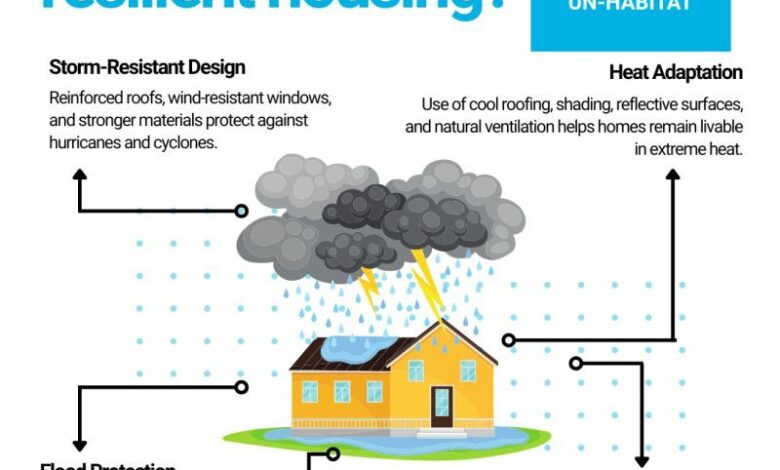
The Architecture of Survival: Why Our Homes Must Learn to Adapt
For centuries, we built houses to keep the rain out. Today, we must build them to withstand the storm of the century and then do it again next week. According to UN-Habitat, climate-resilient housing is the shift from “static” shelter to “dynamic” systems that can absorb, recover from, and thrive amidst environmental shocks.
This isn’t a premium upgrade; it is the new baseline for human safety.
The Five Pillars of the Resilient Home
To build for a changing world, we must integrate “climate intelligence” into every brick and beam:
- The Storm Shield: We are moving toward “hardened” envelopes. This means reinforced roof-to-wall connections that defy cyclonic winds and impact-resistant glass that treats flying debris like a minor nuisance rather than a catastrophe.
- The Amphibious Strategy: Instead of fighting the water, we are learning to live with it. This involves “sacrificial” first floors, elevated pier foundations, and permeable landscaping that acts as a sponge, allowing floodwaters to pass through without compromising the structural heart of the home.
- Thermal Autonomy: A resilient home stays livable even when the power grid fails. By using “cool roofs” that reflect solar radiation and strategic shading that mimics a forest canopy, we can maintain safe indoor temperatures during lethal heatwaves without relying on a single watt of air conditioning.
- The Water Vault: As droughts become the new normal, the home must become its own utility. Integrated rainwater harvesting and greywater recycling systems turn every rooftop into a catchment area, ensuring that a dry spell doesn’t mean a dry tap.
- The Living Buffer: We are rediscovering that nature is our best engineer. Mangrove fringes and “bioswales” (landscaped channels) don’t just look good they are high-performance infrastructure that shatters storm surges and cools entire neighborhoods through evapotranspiration.
From Extraction to Endurance
The green building sector is at a crossroads. We are moving away from an era of “extract and build” toward one of “design and endure.” The most valuable buildings of the next decade won’t just be the most beautiful; they will be the ones that are still standing, cool, and dry after the clouds clear.
In a warming world, we don’t just need roofs over our heads. We need a partner in survival.


