𝗔𝗰𝘁𝗶𝘃𝗲 𝗺𝗼𝗯𝗶𝗹𝗶𝘁𝘆 𝗶𝗻 𝗦𝗼𝘂𝘁𝗵𝗲𝗿𝗻 𝗘𝘂𝗿𝗼𝗽𝗲𝗮𝗻 𝗰𝗶𝘁𝗶𝗲𝘀
𝗔𝗰𝘁𝗶𝘃𝗲 𝗺𝗼𝗯𝗶𝗹𝗶𝘁𝘆 𝗶𝗻 𝗦𝗼𝘂𝘁𝗵𝗲𝗿𝗻 𝗘𝘂𝗿𝗼𝗽𝗲𝗮𝗻 𝗰𝗶𝘁𝗶𝗲𝘀
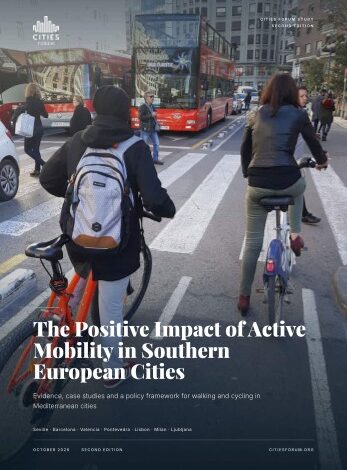
We are happy to share the second edition of our study “The Positive Impact of Active Mobility in Southern European Cities”.
It covers seven cities in four countries, and each one took a different route. Seville built a connected network of protected cycle tracks in about two years. Pontevedra has been giving its centre back to pedestrians since 1999. Barcelona reorganised whole neighbourhoods around Superblocks, and Valencia turned its old riverbed into a green corridor almost 10 km long. Lisbon brought electric bike-share to its hills, Milan priced car access to its centre and Ljubljana made its historic core one of the most walkable in Europe.
A few figures from the study:
🔹 Cycling to work is linked to a 41% lower risk of death
🔹 Every km walked brings society €0.37 and every km cycled €0.18, while every km driven costs €0.11
🔹 Seville built its basic cycle network for about €0.27 million per km, compared with €35.2 million per km for its first metro line
🔹 A 3.5 m lane carries about 12,000 people an hour by bicycle, compared with 1,500 to 2,000 in cars
We have also documented the setbacks. Progress stalls when investment stops, when projects rest on fragile legal procedures, or when the metropolitan ring is left out of the plan. The study closes with ten recommendations and a three-year roadmap for city leaders.
The authors: Zeina Nazer, P.Eng M.Sc. MBA MPhil PhD, Shailendra Kaushik, Juan Bueno and Leelavathy Naidu. Thank you all for the work behind it.
The full study is attached as a PDF. We would love to hear which of these cities is most useful for your own work.