10 Sustainable development financed with carbon credits
The Carbon Multiplier: How Credits Are Financing the Global Goals
Carbon credits are often pigeonholed as mere “accounting tools” for corporate offsets. However, a new narrative is emerging: credits as catalytic finance. When built with integrity, a single carbon credit can act as a financial engine that powers multiple UN Sustainable Development Goals (SDGs) simultaneously.
By linking private capital to localized climate action, carbon finance is bridging the gap between high-level climate ambition and ground-level human prosperity.
1. Environmental Restoration: Beyond the Carbon Molecule
While the primary “unit” of a credit is one metric ton of CO2, the secondary benefits often called co-benefits are where the real transformation happens.
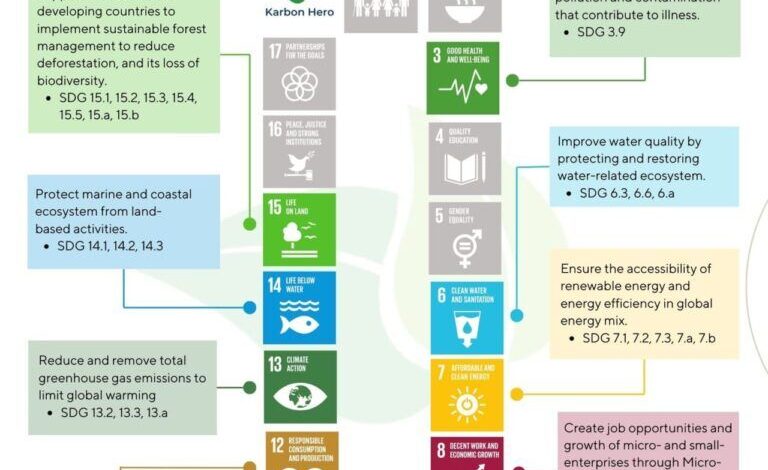
- SDG 15 (Life on Land): Credits finance the protection of “High Integrity” forests. This doesn’t just store carbon; it preserves the complex corridors required for biodiversity to thrive.
- SDG 14 (Life Below Water): “Blue Carbon” projects mangrove and seagrass restoration protect coastlines from erosion and provide nurseries for global fish stocks.
- SDG 6 (Clean Water): Forest conservation projects act as natural water filtration systems, securing the watersheds that provide clean drinking water to millions.
2. The Social Dividend: Health and Equity
Carbon finance is increasingly being used to solve “the silent crisis” of household pollution and energy poverty.
- SDG 3 (Good Health & Well-being): Clean cookstove projects, funded by carbon credits, replace open-fire cooking. This dramatically reduces indoor air pollution the leading cause of respiratory illness for women and children in developing regions.
- SDG 7 (Affordable and Clean Energy): Credits provide the “viability gap” funding needed to bring solar mini-grids to off-grid communities, replacing expensive and dirty diesel generators.
- SDG 5 (Gender Equality): By reducing the time spent gathering fuelwood (often a 4–6 hour daily task), carbon-financed projects free up time for women to pursue education or income-generating activities.
3. Economic Resilience: Building the Circular Economy
The “Green Economy” is not just about cutting emissions; it’s about creating new ways to thrive. Carbon credits incentivize the shift from extraction to circulation.
- SDG 8 (Decent Work & Economic Growth): Carbon projects are labor intensive. From forest rangers to specialized technicians for methane capture, these projects create high quality local jobs.
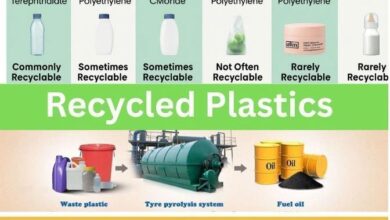
- SDG 12 (Responsible Consumption & Production): Credits provide the financial incentive for industries to adopt circular practices, such as waste-to-energy systems and advanced recycling technologies that were previously cost-prohibitive.
The Integrity Shift: Transparency as a Bridge
For carbon credits to function as a bridge to the SDGs, integrity is non-negotiable. The market is shifting toward a “High-Quality” model characterized by:
- Additionality: Proving the sustainable development would not have happened without the carbon finance.
- Permanence: Ensuring the forest or technology remains in place for decades.
- Benefit Sharing: Transparently documenting how much of the credit price actually reaches the local community.
Climate Action as Shared Value
The true power of a carbon credit lies in its ability to channel private capital into public goods. It is a mechanism that translates a global atmospheric need into a local economic opportunity. When we finance a carbon credit, we aren’t just buying an offset; we are investing in a cleaner, fairer, and more resilient world.
source: