ESG Implementation Roadmap
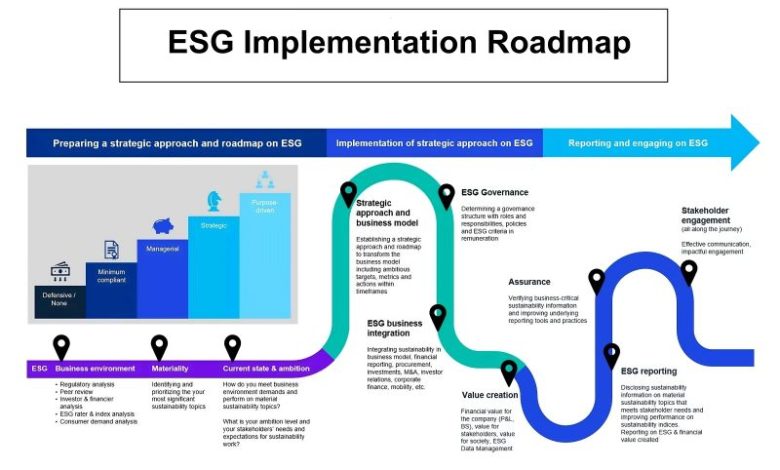
Implementing ESG requires a structured, phased approach to ensure it becomes an integral part of business operations, rather than a compliance exercise. The process begins with developing a clear ESG strategy, followed by embedding sustainability into the business model, and concluding with transparent reporting and stakeholder engagement.
The first phase involves preparing a strategic approach by analyzing the business environment, regulatory requirements, and stakeholder expectations. Material topics must be prioritized to align sustainability efforts with business goals, ensuring that the focus is on areas with the greatest impact and relevance.
Once the strategy is defined, the next phase is integrating ESG into core business functions. This includes governance structures, procurement, financial reporting, and investor relations. Setting measurable targets and embedding sustainability into operations ensures progress is both trackable and impactful.
Transparent reporting is essential to demonstrate accountability. Verifying data through assurance processes improves the quality of sustainability disclosures. ESG reporting must focus on material issues and highlight the financial and societal value created through sustainability initiatives.
Throughout the process, continuous stakeholder engagement is key. Effective communication builds trust and ensures ESG efforts are aligned with the expectations of investors, regulators, and consumers, driving long-term value and resilience in a rapidly evolving business landscape.
Source: KPMG