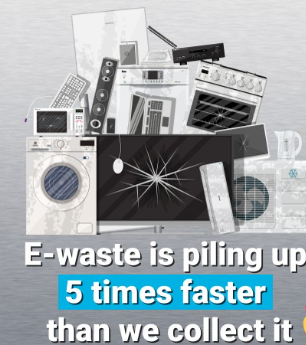
E-waste is pilling up 5 times faster than we collect it
Behind every discarded phone and laptop lies a story of hidden costs communities grappling with toxic waste and environmental harm. But it doesn’t have to be this way. What if your old devices could fuel a sustainable future instead of burdening the planet?
E-Waste: A Growing Crisis
E-waste isn’t just junk; it’s a double-edged sword. Packed inside are toxic substances like mercury that endanger human health, but also treasures $91 billion worth of metals like gold, copper, and iron, waiting to be reclaimed.
Why Recycling Matters
Imagine saving 93 million tonnes of CO2 emissions and avoiding the extraction of 900 million tonnes of raw materials just by recycling. Yet, while the potential is massive, so is the challenge. By 2030, e-waste is projected to skyrocket to 82 million tonnes, but current trends suggest recycling rates could plummet to just 20%.
A Vision for Change
It doesn’t have to end in a landfill. If we collectively raise global recycling rates to 60% by 2030, the impact would be transformative reducing health risks, recovering valuable materials, and generating over $38 billion in net benefits.
This is more than a waste issue; it’s an economic opportunity, an environmental necessity, and a moral imperative. Together, we can create a world where e-waste becomes a resource, not a problem.
What can we do?
- Build infrastructure for efficient collection and recycling.
- Promote repair culture to extend the life of electronics.
- Advocate for policies supporting sustainable systems and a circular economy.
Every action counts. It’s time to rethink, reclaim, and rebuild because the future of e-waste is in our hands.
source :