ESG Climate Risk
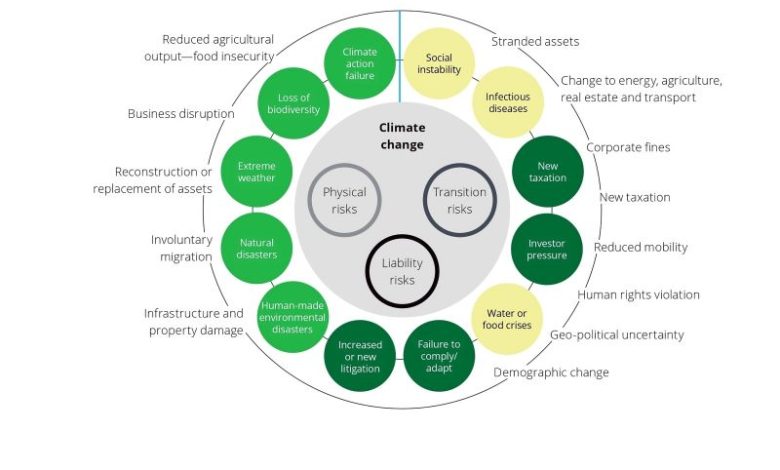
The ESG climate risk universe encompasses a complex array of interconnected risks that pose challenges for businesses, governments, and society. These risks fall into three key categories: physical, transition, and liability risks. Understanding and addressing these risks is critical for organizations aiming to ensure resilience and long-term value creation.
Physical risks stem from the direct impacts of climate change, such as extreme weather events, biodiversity loss, and natural disasters. These risks disrupt business operations, damage infrastructure, and threaten food security. Organizations operating in vulnerable regions must account for these impacts in their risk assessments and strategic planning to mitigate potential disruptions.
Transition risks arise as industries adapt to a low-carbon economy. Regulatory changes, investor pressure, new taxation models, and stranded assets create a dynamic environment requiring proactive adaptation. Companies need to anticipate shifts in energy, transportation, and other sectors to maintain competitiveness and compliance while avoiding unnecessary exposure.
Liability risks reflect the growing legal and reputational challenges faced by organizations. These risks can result from non-compliance, inadequate disclosure, or litigation over climate-related issues. Transparency and adherence to evolving regulatory standards are essential to safeguarding reputations and mitigating financial losses.
Addressing the ESG climate risk universe requires a multifaceted approach. Integrating climate risks into enterprise risk management, aligning operations with sustainability goals, and fostering innovation in products and services are key steps to navigate this evolving landscape. Effective action not only reduces exposure but positions organizations as leaders in sustainability, unlocking opportunities for growth and value creation.
Source: Deloitte
Temukan peta dengan kualitas terbaik untuk gambar peta indonesia lengkap dengan provinsi.