Sustainable investing strategies
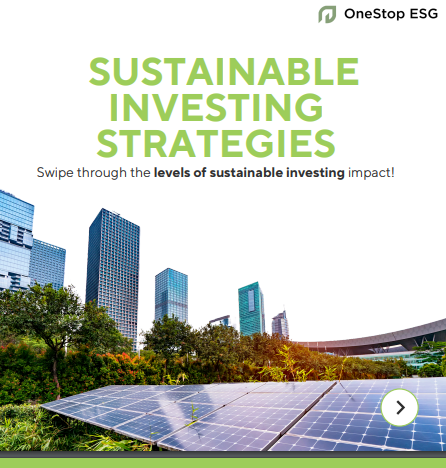
Investing is no longer just about maximizing returns—it’s about shaping the future we want to live in. As the world grapples with climate change, social inequality, and ethical business practices, sustainable investing has emerged as a powerful tool for driving positive change. But not all sustainable investments are created equal. There’s a spectrum of strategies, ranging from traditional profit-driven financing to philanthropy that prioritizes impact above all. Understanding these levels can help investors align their portfolios with both their financial goals and their values.
Level 0: Profit-Driven Financing
At the foundation of the investment spectrum is traditional finance—where profit is king. Investors at this level prioritize financial returns without considering environmental, social, or governance (ESG) factors. The focus is purely on maximizing shareholder value, often at the expense of broader sustainability concerns. While this approach has historically dominated the financial world, it is increasingly being challenged as stakeholders demand greater accountability from corporations.
Level 1: ESG Risk Management
Recognizing the financial risks associated with poor corporate governance, environmental degradation, and social irresponsibility, many investors now integrate ESG factors into their decision-making. This level is not necessarily about making a positive impact but rather about mitigating risks that could affect long-term profitability. Companies with strong ESG performance are often seen as less risky, more resilient, and better positioned for long-term success.
Level 2: Sustainable Impact Investing
Moving beyond risk mitigation, sustainable impact investing actively seeks companies and projects that contribute positively to society and the environment while still generating financial returns. This strategy balances profit with purpose—investing in renewable energy, sustainable agriculture, and inclusive economic development, for example. The goal is to support businesses that solve pressing global challenges while still delivering strong financial performance.
Level 3: Impact-First Investing
At this level, financial returns take a backseat to measurable social and environmental impact. Investors are willing to accept lower profits—or even break-even scenarios—if it means driving meaningful change. Impact-first investing often supports high-risk, early-stage ventures in areas such as climate solutions, affordable housing, and social entrepreneurship. These investments may not yield immediate financial rewards, but they pave the way for transformative solutions to global challenges.
Level 4: Sustainable Philanthropy
The final stage is where financial return becomes secondary to making a difference. Sustainable philanthropy directs funds toward initiatives that may not generate profit at all but create substantial societal and environmental benefits. Unlike traditional philanthropy, which often focuses on short-term charitable giving, sustainable philanthropy aims for long-term systemic change. This could include funding climate adaptation projects, education programs, or conservation efforts that would struggle to attract traditional investment.
Finding Your Place on the Spectrum
Sustainable investing is not a one-size-fits-all approach. Some investors may blend strategies, incorporating ESG risk management while allocating a portion of their portfolio to impact-first initiatives. Others may transition from profit-driven finance to more sustainability-focused strategies as they become more aware of the interconnectedness of financial markets and global challenges.
source :