
ESG Wheel: Key Themes and Topics
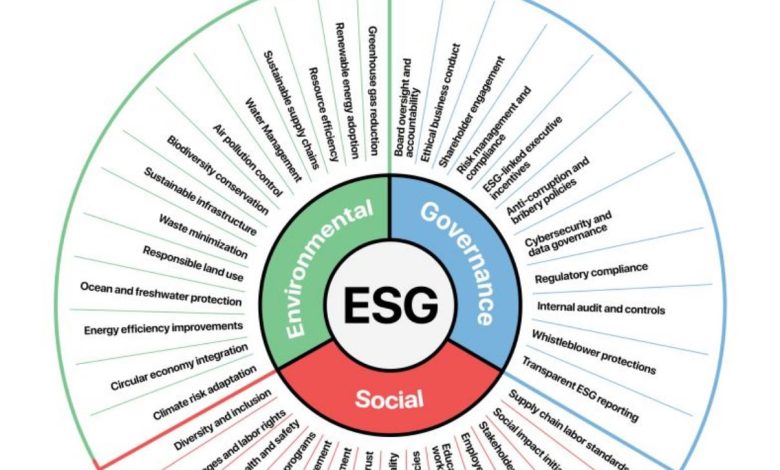
ESG integration in business requires a comprehensive approach. It goes beyond reducing emissions or improving governance, covering a wide range of interconnected topics across Environmental, Social, and Governance dimensions.
Environmental factors include biodiversity conservation, resource efficiency, circular economy integration, and climate risk adaptation, all of which influence long-term business resilience.
Social considerations extend beyond traditional corporate responsibility, encompassing workplace health and safety, fair wages, diversity, ethical sourcing, and consumer protection.
Governance plays a fundamental role in ensuring transparency, accountability, and ethical business practices. Key aspects include ESG-linked executive incentives, anti-corruption policies, and regulatory compliance.
Addressing ESG requires a systemic approach. Environmental risks often intersect with social and governance challenges, making an integrated strategy essential for meaningful impact.
This ESG Wheel provides a simplified representation of the many factors businesses must consider. In practice, ESG management is highly dynamic and industry-specific.
Materiality varies across sectors, with different industries prioritizing ESG topics based on regulatory landscapes, stakeholder expectations, and risk exposure.
A structured ESG framework aligns sustainability with business objectives, ensuring compliance, resilience, and long-term value creation.
The challenge lies in operationalizing ESG strategies—moving from concept to execution with clear targets, measurable outcomes, and continuous improvement.
Source:


