
Slum upgrading is climate action experience and insights from the global south
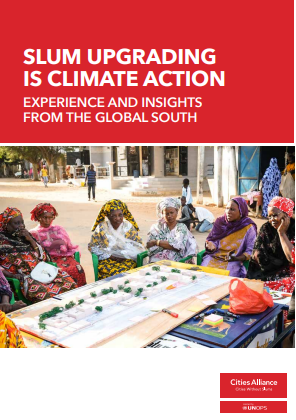
Cities face a dual challenge of catering to rapidly growing populations while managing intensifying climate risks and rising greenhouse gas emissions. Unplanned urbanization, coupled with climate change, poses complex risks, especially for people who are already grappling with poverty, unemployment, and inadequate housing and service. In this context, cities hold immense potential to change the course of development. Accordingly, the Intergovernmental Panel on Climate Change (IPCC) has argued for a focus on urban transformations, highlighting that informal settlements are vital for understanding the delivery of these transformations. Community-led and co-produced solutions are integral to building resilience in cities.5 Urban poor residents are especially vulnerable to climate change because they are forced to live in at-risk settlements that lack access to adequate and affordable housing, infrastructure, and services, characterised by political and institutional marginalisation. By addressing the underlying drivers of
risk, climate-responsive upgrading provides opportunities to improve living conditions, whilst reducing exposure and vulnerability to climate hazards. It is also clear that action taken to address climate change without due consideration for the needs of these communities can fail to address or even exacerbate deeper structural issues contributing to informality and vulnerability.
Organized urban poor communities – in SDI, they are federations made up of hundreds or thousands
of saving groups united across neighbourhoods and cities – are demonstrating how upgrading projects
focused on improving housing, infrastructure, and services can enhance community resilience. The
emphasis on upgrading as climate action reinforces that solutions must address the lived realities of the urban poor. Unlike top-down, technocratic approaches that risk margin a lising informal settlements, community led upgrading leverages local knowledge, fosters collaboration, and challenges conventional development models. This approach not only builds resilience at the community level, but also promotes social justice by confronting inequalities and empowering those most affected by climate change. In addition, local governments in Global South cities often have limited resources to deliver basic services, infrastructure, and adaptation interventions. Partnerships with organized urban poor communities present novel opportunities to develop innovative approaches that draw on the resources and knowledge of all stakeholders.
source :


