
The impact of climate change on the SDGs
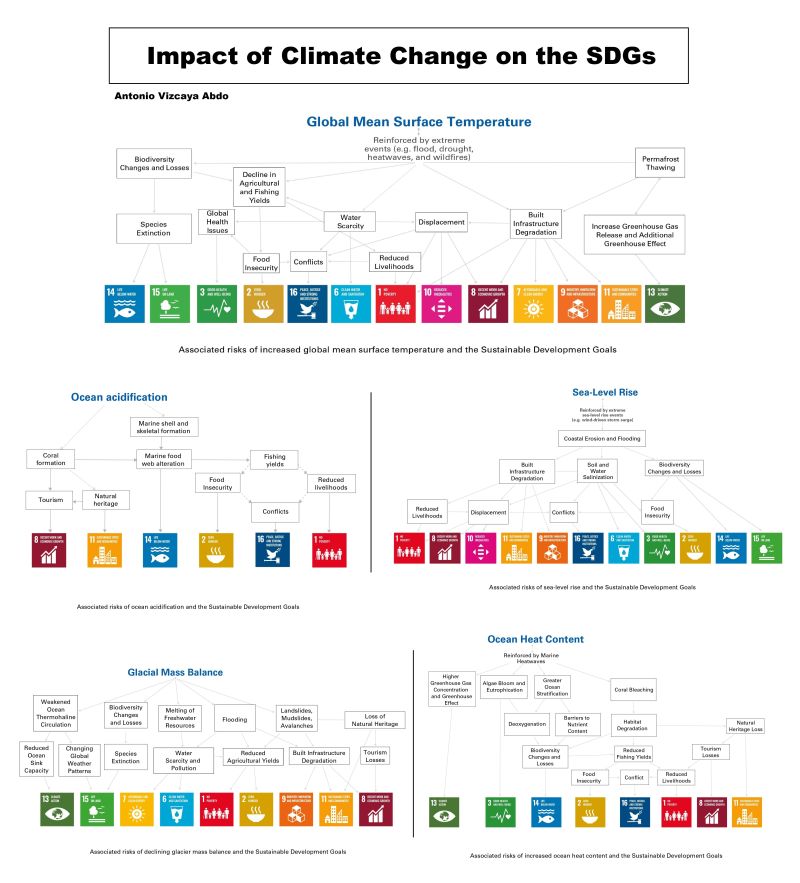
The latest State of the Global Climate 2024 report from WMO provides a clear assessment of how accelerating climate change is affecting global stability.
With 2024 recorded as the hottest year on record—1.55°C above pre-industrial levels—the implications extend far beyond temperature increases. The findings highlight the direct and systemic risks climate change poses to achieving the UN Sustainable Development Goals (SDGs).
Rising temperatures, ocean acidification, sea-level rise, and glacial melt are driving widespread environmental and socio-economic disruptions. These changes are not occurring in isolation; they are interconnected, amplifying existing challenges related to food security (SDG 2), water availability (SDG 6), economic resilience (SDG 8), and biodiversity loss (SDGs 14 & 15).
Ocean changes are among the most critical risks. Increasing ocean temperatures and acidification are disrupting marine ecosystems, reducing fish stocks, and weakening the ocean’s ability to act as a carbon sink. This has significant consequences for coastal communities, food security, and global supply chains.
Glacial loss and sea-level rise are reshaping landscapes, affecting infrastructure, water resources, and human settlements. Coastal erosion, land degradation, and increased flooding threaten urban development (SDG 11), economic productivity (SDG 9), and disaster resilience (SDG 13). These impacts also contribute to population displacement, further straining social and economic systems.
The increase in extreme weather events, from heatwaves to hurricanes, is exacerbating global inequality. Agricultural losses, infrastructure damage, and rising adaptation costs are disproportionately affecting developing regions, slowing progress toward economic stability, sustainable production, and resource security (SDGs 8 & 12).
The WMO report emphasizes that while exceeding 1.5°C in a single year does not mean the Paris Agreement target has been breached, the trend underscores the urgency of reducing emissions and strengthening adaptation strategies. Without immediate action, climate risks will continue to escalate, undermining progress toward the SDGs and increasing long-term economic and environmental costs.
Addressing these challenges requires systemic policy shifts, investment in climate resilience, and cross-sector collaboration. As climate change intensifies, integrating sustainability into decision-making at all levels will be essential to mitigating risks and safeguarding global development objectives.
Source: State of the Global Climate 2024
Temukan peta dengan kualitas terbaik untuk gambar peta indonesia lengkap dengan provinsi.


