Environmental Dimension of the SDGs
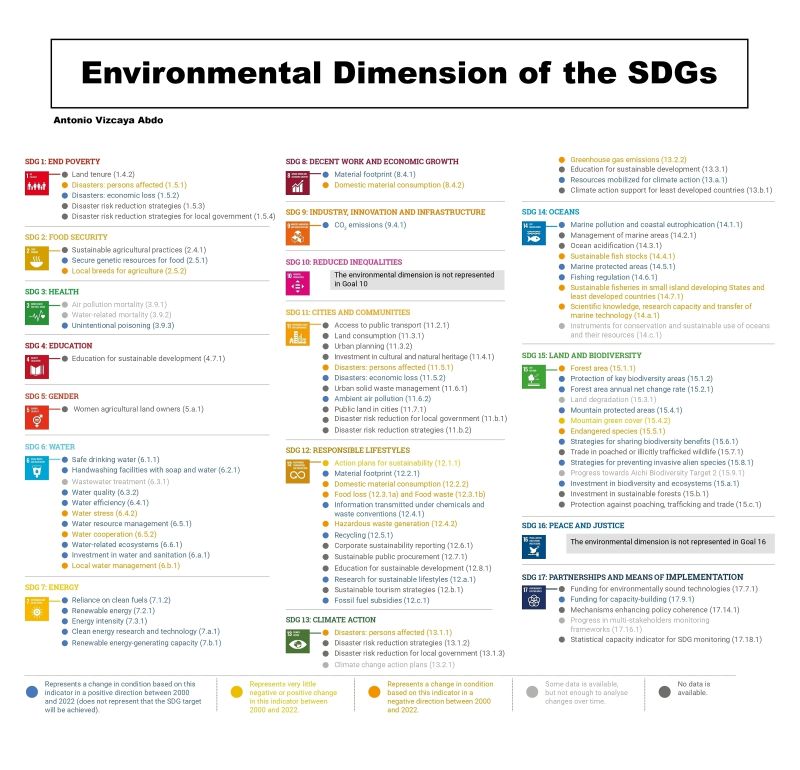
The structured scorecard developed by the United Nations provides a clear and professional visualization of the integral relationship between environmental sustainability and the complete framework of the Sustainable Development Goals. This analytical tool effectively demonstrates that environmental considerations are not isolated concerns but rather fundamental prerequisites underpinning the successful achievement of all 17 SDGs.
This UN scorecard highlights that while specific goals such as SDG 6 (Clean Water and Sanitation), SDG 13 (Climate Action), SDG 14 (Life Below Water), and SDG 15 (Life on Land) directly address environmental domains, their successful implementation is intrinsically linked to progress across the broader development agenda. For instance, the sustainability of agricultural practices (SDG 2) is contingent upon healthy and functional ecosystems, and positive public health outcomes (SDG 3) are directly influenced by the quality of the surrounding environment.
Furthermore, the UN scorecard underscores that climate action, as specifically addressed in SDG 13, represents a critical cross-cutting imperative with implications for all SDGs. The pervasive impacts of climate change can significantly impede advancements in areas such as poverty reduction (SDG 1), food security (SDG 2), and infrastructure development (SDG 9), thereby illustrating its systemic relevance across the entire SDG framework.
As clearly presented in this UN scorecard, the integrity of the planet’s ecological systems is not a discrete pillar of development but rather the essential foundational capital upon which all sustainable progress is built. Environmental degradation erodes natural resources, destabilizes economic systems, and exacerbates societal vulnerabilities, consequently hindering the realization of a more equitable and prosperous global landscape as envisioned by the SDGs.
The UN scorecard implicitly emphasizes the necessity of robust monitoring and evaluation mechanisms to accurately assess the integration of environmental factors within SDG implementation strategies.
The effective realization of the 2030 Agenda necessitates a strategic reorientation towards recognizing the environment as a core enabling factor for all developmental objectives. Integrated policies and collaborative frameworks that prioritize environmental sustainability are critical for achieving cohesive and enduring progress throughout the entire SDG framework, as clearly illustrated by this UN-developed scorecard.
In conclusion, this scorecard effectively illuminates that a steadfast commitment to environmental stewardship is not merely one of several priorities within the 2030 Agenda but rather a fundamental imperative for achieving its interconnected and ambitious objectives.
Source: