Circular Economy Model
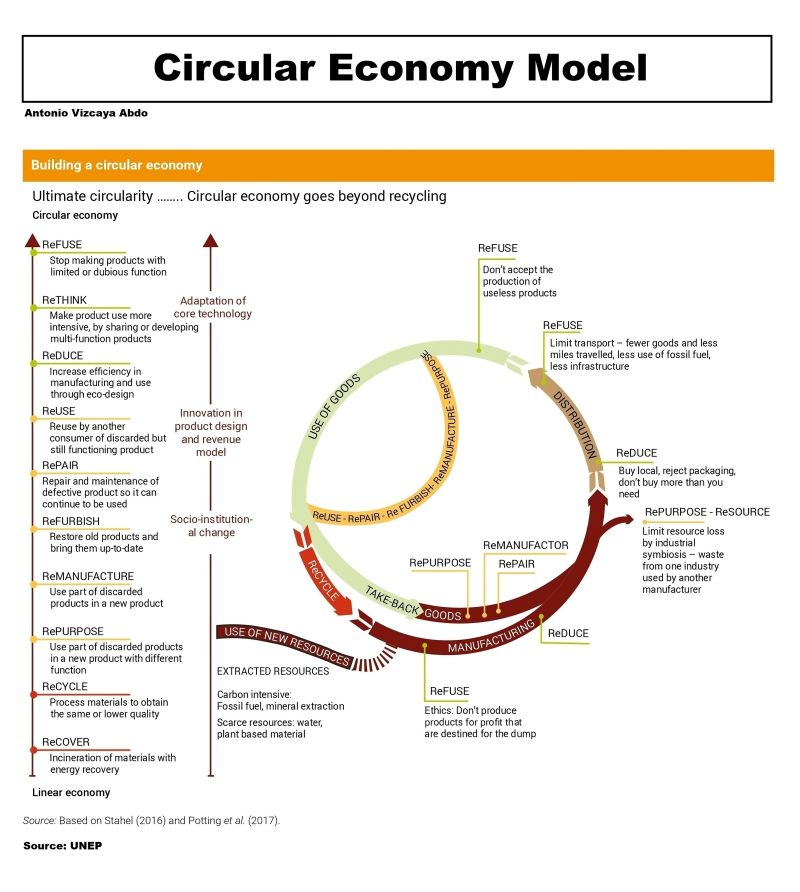
The linear economy is based on extracting, using, and discarding resources. This model assumes unlimited supply and unrestricted waste disposal, which is no longer sustainable in a resource-constrained world.
A circular economy aims to extend the life of products and materials. It keeps resources in circulation through strategies like reuse, repair, refurbishment, remanufacturing, and recycling.
Circularity reduces the need for virgin materials and minimizes environmental impact. It addresses key challenges such as climate change, resource scarcity, and waste generation.
This model also supports greater supply chain resilience. By limiting dependence on finite resources, it helps reduce exposure to price volatility and supply disruptions.
Circular economy strategies go beyond waste management. They involve eco-design, smarter production processes, shared-use models, and systems that enable product recovery.
Adoption remains slow due to institutional resistance and outdated systems. Moving forward requires structural change, innovation, and supportive regulatory frameworks.
For companies, circularity offers operational efficiency, reduced risks, and alignment with emerging sustainability standards. It is also becoming a key factor in investor and customer expectations.
The transition is complex but essential. Embracing a circular economy model enables businesses to drive long-term value while contributing to environmental and economic stability.
Source: