Nature-based solutions for ports
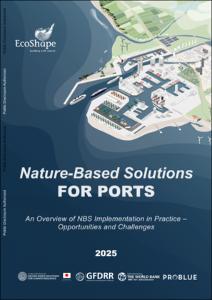
Ports are of crucial importance to global trade and economic activity, serving as critical gateways for goods and services. According to the International Chamber of Shipping, approximately 11 billion tons of goods are transported by ship annually, including essential commodities such as grain, agricultural products, and processed foods. Ports are especially vital to the economies of low and middle-income countries and small island states, which often rely heavily on imports. The 2024 United Nations (UN) Trade and Development Maritime Transport Review concluded that consumers in these countries are particularly affected by rising shipping rates, exacerbated by disruptions in key trade routes such as the Red Sea and the Panama Canal, due to their geographic isolation, limited shipping options, and smaller economies of scale.
Ports face challenges in balancing operational and commercial efficiency with climate risks and mitigation goals, adapting to changing environments, and advancing towards sustainability goals. The natural, social, and economic environments are constantly changing while demands for improved efficiency and sustainability grow. This mission toward sustainability also meets the evolving expectations of society and the global economy regarding climate resilience, while ensuring that ports remain competitive and responsible stewards of the environment and coastal communities. Nature-based solutions (NBS) offer a multifaceted strategy for integrating natural processes into port investments and operations.
NBS can offer ports an additional strategy to enhance their resilience to climate risks, leverage sustainable solutions with multiple benefits, contribute to more integrally managing the coastal system that is shared with other stakeholders, advance their climate mitigation and adaptation goals, and further support Sustainable Development Goals (SDGs) in their operations.
Yet, NBS are not a totally new concept to ports, which have interacted with and influenced the coastal landscape and ecosystems for centuries. Consideration of coastal processes is inherent to port planning, design, and operations and some of the now-recognized NBS concepts have been demonstrated to be technically sound and cost effective in natural systems. Newer and more innovative approaches such as ecological breakwaters, enhanced hard structures, and strategic uses of sediment are, therefore, building from an ample evidence base of the role of ecosystems in coastal dynamics and services. Therefore, NBS may not require totally new and in-depth foundational institutional work; rather, it can leverage the existing approaches and experience base in ports to provide more comprehensive solutions to their sustainability, use of new technologies, and their interaction with the coastal system. NBS may represent an opportunity to improve existing practices for more comprehensive and sustainable outcomes.
source:
https://openknowledge.worldbank.org/entities/publication/f6e6b4cb-74c0-4bef-ab5c-da6cc0bdbebe
Temukan peta dengan kualitas terbaik untuk gambar peta indonesia lengkap dengan provinsi.