The ocean floor: earth’s hidden landfill
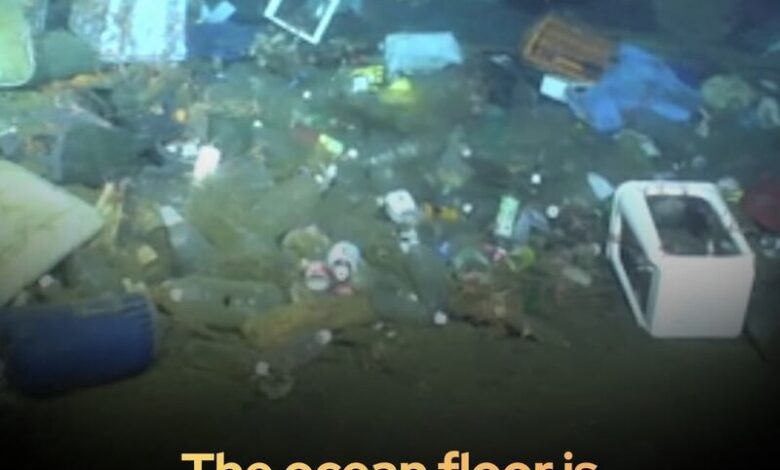
The Abyss is Full: Why “Away” is Not a Place
When we toss a plastic bottle into the sea or watch a balloon drift over the horizon, we like to pretend it enters a void. We call it “throwing it away.” But as a recent global review by the University of Barcelona proves, “away” has a geographic coordinate and it’s the most vulnerable place on Earth.
Our seafloors have officially transitioned from mysterious frontiers to planetary landfills.
The Funnel Effect: Nature’s Garbage Chutes
The deep ocean isn’t just a flat desert; it’s a landscape of canyons, ridges, and trenches. Powerful underwater currents act like giant conveyor belts, sweeping our debris off the continental shelves and dumping it into deep basins.
The Messina Metric: In the Strait of Messina, the concentration of trash is so high that scientists found one million pieces of debris per square mile. That isn’t just “pollution”; that is a new geological layer of human waste.
The 36,000-Foot Reality Check
It is a haunting thought: even in the Mariana Trench the deepest point on our planet human fingerprints are everywhere.
- The 62% Rule: Plastic makes up the vast majority of deep-sea litter. It doesn’t biodegrade; it just breaks down into smaller, more toxic fragments.
- The Depth Factor: At 36,000 feet, the pressure is immense, the light is non-existent, and yet the plastic persists.
- Ghost Fishing: Abandoned nets and gear continue to “hunt” for centuries, trapping fish and marine mammals in a cycle of death that serves no one.
A 3-Billion-Ton Ticking Clock
If we don’t change the trajectory of our waste management, we aren’t just looking at a few dirty beaches. Within 30 years, the ocean is projected to hold 3 billion metric tons of trash.
This isn’t just an “aesthetic” problem. This debris:
- Chokes ecosystems that we rely on for oxygen and food.
- Exposes marine life to endocrine disrupting chemicals.
- Reshapes the seafloor, physically altering habitats before we’ve even had the chance to map them.
The ocean floor is the Earth’s final sink. Because it is invisible to the naked eye, it has been easy to ignore. But a “hidden” landfill is still a landfill, and the bill for this ecological debt is coming due. We don’t need more “awareness” we need a radical redesign of how materials enter and exit our economy.
source: