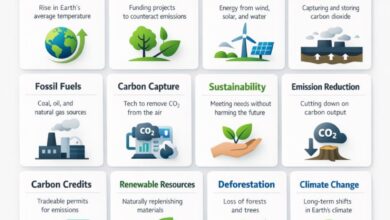
Commonly interchange ESG terms
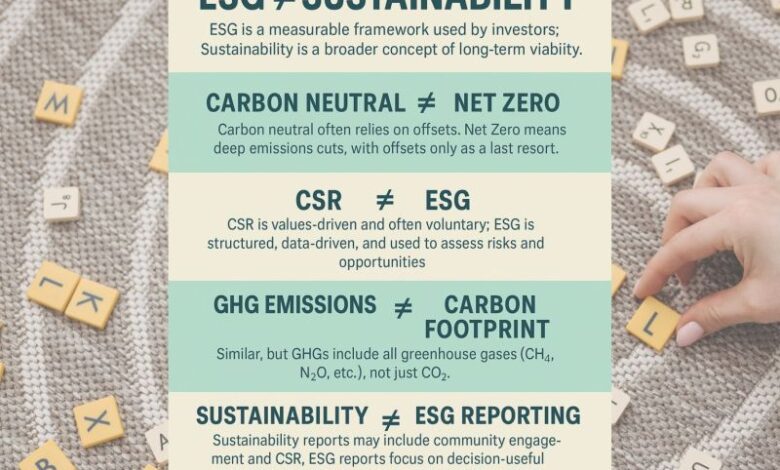
The ESG Dictionary: Why Precision is the New Strategy
In the high stakes world of climate finance and corporate responsibility, words aren’t just semantics they are risk signals. Using ESG terms interchangeably doesn’t just cause confusion; it creates a “credibility gap” that can lead to misplaced capital and accusations of greenwashing.
If you want to build a resilient business, you have to move past the buzzwords and master the technical nuances.
1. The Core Split: Vision vs. Scorecard
Confusion at the top level often trickles down into every department. It is vital to distinguish between the destination and the tools used to get there.
- Sustainability vs. ESG: Sustainability is the broad “Big Picture” mindset of creating long-term value for People, Planet, and Profit. ESG is the specific “Tool” used to measure financial impact, risk, and returns for investors.
- CSR vs. ESG: CSR is a values-led, often voluntary commitment to company culture and ethics. ESG is a structured, data-driven framework designed to assess risk and resilience.
- Sustainability Reporting vs. ESG Reporting: Sustainability reports tell the “Story” of purpose and projects. ESG reporting delivers the “Data” and metrics that align with global standards like GRI or ISSB.
2. The Science Gap: Deciphering the Atmosphere
Misunderstanding emissions terminology can result in weak targets that fail to satisfy regulators or scientists.
- Carbon Neutral vs. Net Zero: Carbon neutrality is often a “math trick” relying heavily on offsets to balance current emissions. Net Zero is a much higher bar it demands deep, absolute emission cuts first, using offsets only as a final, unavoidable step.
- Carbon Footprint vs. GHG Emissions: A “Carbon Footprint” typically narrows in on CO2. Greenhouse Gas (GHG) Emissions” is the full spectrum, including potent warming agents like Methane (CH4) and Nitrous Oxide (N2O).
3. The Investor’s Lens: Harm vs. Help
How you label your investment strategy dictates the “Handprint” you leave on the world.
- Sustainable Investing: Often uses “screens” to avoid harm or mitigate risks (e.g., divesting from tobacco or coal).
- Impact Investing: Specifically targets and measures a positive, proactive change (e.g., funding a specific renewable energy project).
The Tactical Cheat Sheet
| Term A | Term B | The Critical Difference |
| Sustainability | ESG | Sustainability is the goal; ESG is the measurement. |
| Footprint | Handprint | Footprint is the harm you minimize; Handprint is the good you scale. |
| People | Prosperity | People (SDGs 1-5) is the social heart; Prosperity (SDGs 7-11) is the economic engine. |
Clarity is a competitive advantage. When an organization uses precise language, it builds Trust with investors and Purpose with employees. Organizations that connect their long-term vision with hard data don’t just talk about impact they demonstrate it.
source: