Vietnam turns banana waste into eco-friendly school uniforms
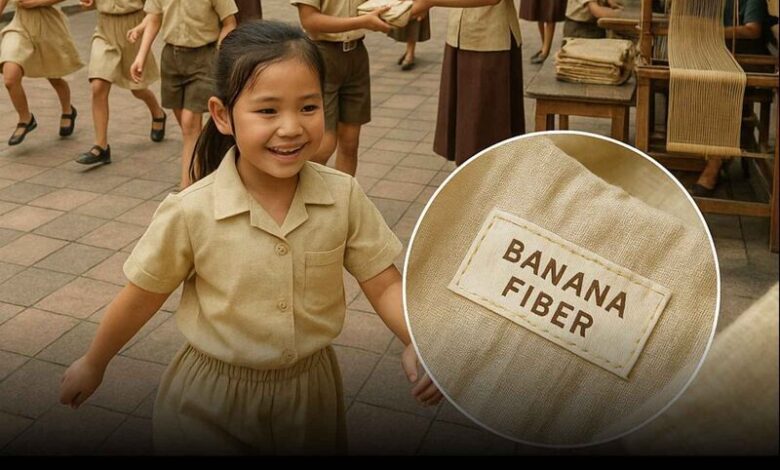
The transformation of banana stems from “agricultural debris” into “performance textiles” is a masterclass in Value Upcycling. Vietnam is not just making clothes; it is re-engineering a supply chain that turns a massive environmental liability into a high-performance economic asset.
1. The Anatomy of an Upcycled Textile
In traditional agriculture, banana stems are a burden they are often left to rot, emitting methane, or burned, releasing carbon. By intercepting this flow, the textile industry extracts a fiber that competes with high-end synthetics without the petrochemical cost.
The Biological Blueprint
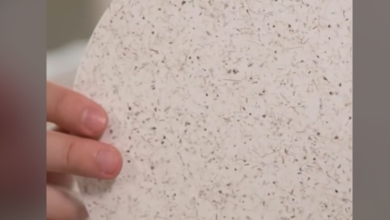
- Natural Thermoregulation: Banana fiber is inherently porous. These microscopic “voids” act as a natural ventilation system, absorbing moisture and releasing it rapidly a process known as wicking.
- High Tensile Strength: Despite its lightweight feel, the fiber’s cellulose structure is incredibly strong, making it durable enough to withstand the high-friction environment of a school playground.
- Natural Shielding: The fiber is naturally resistant to UV rays and heat, providing a protective barrier for students in tropical agroklimates.
2. Closing the Loop: The “Banana-to-School” Lifecycle
This initiative moves beyond “eco-friendly” labeling into a truly Regenerative Economic Model.
| Phase | Linear Logic (The Old Way) | Circular Logic (The Vietnam Way) |
| Extraction | Use oil to create polyester. | Upcycle stems from existing food harvests. |
| Utility | Plastic-based uniforms trap heat. | Natural fibers breathe and self-cool. |
| End-of-Life | Uniforms sit in landfills for 200+ years. | Uniforms are 100% biodegradable; return to soil. |
| Economic | Capital flows out to chemical plants. | Capital flows back to local farmers and weavers. |
3. The “Triple Bottom Line” Impact
The success of banana fiber uniforms in Vietnam is measured by more than just fabric quality; it is measured by systemic resilience:
Environmental Shield
Unlike polyester, which sheds microplastics into the water system with every wash, banana fiber is a “clean” textile. It requires no additional land or water to grow, as it is a byproduct of the fruit industry already in operation.
Social Escalation
By creating a market for banana stems, the project provides secondary income streams for rural farmers. This turns “trash collection” into a specialized labor market, fueling local textile cooperatives and preserving traditional weaving techniques.
Design Intelligence
This is a low-tech, high-intelligence solution. It proves that the most sophisticated “smart fabrics” aren’t always made in a lab they are often found in the structural engineering of nature.
4. Strategic Implications for Global Brands
Vietnam’s model offers a blueprint for industries worldwide:
- Supply Chain De-risking: Utilizing local agricultural waste reduces dependency on volatile global plastic and cotton markets.
- Consumer Narrative: In an era of “Greenwashing” skepticism, a product that is literally grown, worn, and composted offers a transparent and undeniable sustainability story.
- Scalability: With billions of tons of banana waste produced globally, this model is a sleeping giant in the $1.5 trillion global apparel industry.
The banana fiber uniform is a reminder that in a truly circular economy, waste is merely a resource looking for a better designer.
source: