The blue carbon handbook
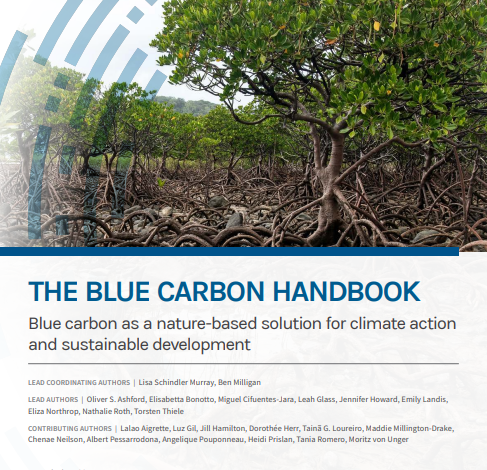
The High-Yield Frontier of Natural Capital
While the world’s attention has long been fixed on the “Green Carbon” of terrestrial forests, a more potent and resilient climate asset is submerged along our shorelines. Blue Carbon the carbon captured by mangroves, seagrasses, and tidal marshes is the ocean’s most efficient technology for atmospheric regulation.
As outlined in the Blue Carbon Handbook by the High Level Panel for a Sustainable Ocean Economy, these ecosystems are no longer just “areas of conservation”; they are the critical infrastructure of the Net-Zero economy.
The Efficiency Dividend: Why “Blue” Outperforms “Green”
Coastal ecosystems are the powerhouses of sequestration. Per hectare, they can capture and store up to ten times more carbon than mature tropical forests.
- The Methane Shield: Unlike freshwater wetlands, saltwater marshes produce negligible amounts of methane, making their net cooling effect significantly higher.
- Millennial Storage: While a forest fire can release decades of stored carbon in hours, blue carbon is locked deep within underwater sediments, where it can remain stable for millennia.
The Multi-Tranche Benefits of Blue Assets
Investing in Blue Carbon provides a “Triple Bottom Line” that standard carbon offsets cannot match. It is a strategic hedge against multiple climate risks:
1. The Kinetic Barrier (Climate Adaptation)
Mangrove forests and salt marshes act as living sea walls. They attenuate wave energy by up to 66%, providing a natural defense against storm surges, erosion, and rising sea levels. This reduces the “Grey Infrastructure” costs (concrete dykes and levees) for coastal municipalities.
2. The Bio-Economic Engine (Fisheries & Livelihoods)
These ecosystems serve as the “nursery” for the global ocean. Seagrass meadows and mangroves support over 50% of the world’s fisheries, directly underpinning food security and the livelihoods of millions of coastal residents.
Strategic Implementation: The Decision-Maker’s Framework
The transition from “Nature” to “Asset” requires a structured policy approach as defined by the Handbook:
| Phase | Strategic Action | Goal |
| Quantification | National Blue Carbon Inventories | Integrating coastal sinks into NDCs (Nationally Determined Contributions). |
| Finance | Blue Bonds & Carbon Credits | Accessing global capital markets to fund restoration. |
| Equity | Community-Led Governance | Ensuring 100% of benefits reach local “custodians” of the coast. |
| Resilience | Nature-Based Solution (NbS) | Replacing costly concrete sea walls with self-repairing ecosystems. |
From Stewardship to Strategic Investment
Protecting Blue Carbon is not merely an act of environmental kindness; it is shrewd risk management. As carbon prices rise and climate volatility increases, nations that protect their “Blue Fringe” will possess a dual advantage:
- A verified carbon sink to meet Net-Zero obligations.
- A resilient coastline capable of withstanding the 21st century’s climate shocks.
source: