
Tahukah Anda
10 Communication controls to avoid greenwashing
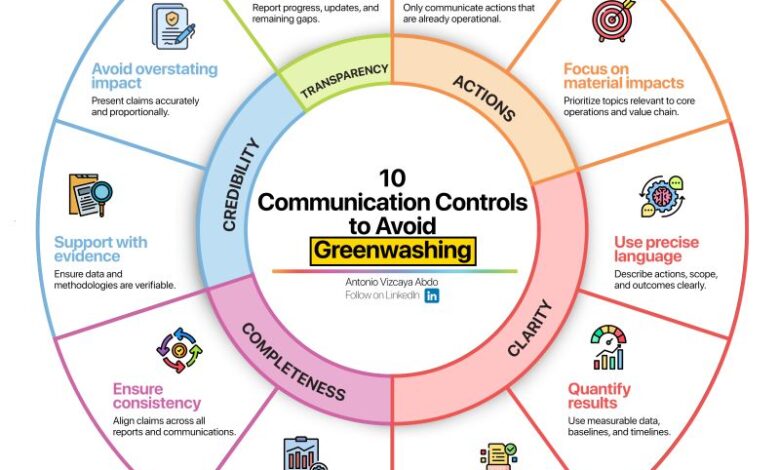
The Credibility Chain: 10 Controls for Authentic Sustainability
Think of these controls as a high-fidelity filter. If a claim can’t pass through all five stages, it shouldn’t be published.
1. The Action Filter: “Is it Done?”
- Proof over Promise: Communicate what has been achieved, not just what is “intended.” A vision for 2050 is a goal; a 10% reduction achieved last year is an action.
- Operational Integration: Ensure the claim is tied to your core business. Highlighting a small charity donation while ignoring the carbon footprint of your main factory creates a “distraction” narrative.
2. The Clarity Filter: “Is it Precise?”
- Banish the Buzzwords: Terms like “Eco-friendly,” “Natural,” or “Green” are legally and scientifically hollow. If you mean “100% Recycled PET,” say that.
- Quantification: Replace adjectives with integers. “Significantly reduced water use” is weak; “Reduced water intensity by 22% per unit” is undeniable.
3. The Completeness Filter: “Is it the Whole Story?”
- Contextual Honesty: Don’t celebrate a “plastic-free cap” if the rest of the bottle is non-recyclable. Avoid “cherry-picking” small wins to hide systemic failures.
- Value Chain Scope: Acknowledge your Scope 3 emissions. True sustainability includes the impact of your suppliers and the end-of-life of your products.
4. The Credibility Filter: “Who Vouched for This?”
- Third-Party Verification: Self-reported data is a red flag for regulators. Use recognized certifications (like B-Corp, LEED, or SBTi) to validate your claims.
- Methodological Rigor: Clearly state how you measured your impact. If your “carbon neutral” claim relies solely on cheap offsets rather than actual reductions, savvy investors will see through it.
5. The Transparency Filter: “Can We See the Gaps?”
- Radical Vulnerability: Credibility is built by admitting what you haven’t solved yet. Report on the gaps and the hurdles alongside the victories.
- Regularity & Access: Sustainability shouldn’t be a one-time glossy brochure. Provide a searchable, data-heavy portal that is updated annually.
The Strategic Shift: From Marketing to Accountability
| Strategy | The Greenwashing Risk | The Authentic Control |
| Visuals | Using nature imagery to imply “clean” products. | Using data-driven infographics of actual impact. |
| Focus | Highlighting a “Green” niche product line. | Reporting on the footprint of the entire company. |
| Timing | Announcing “Net Zero” goals with no interim steps. | Reporting annual progress against a science-based target. |
Why This Matters Now
Regulators (like the SEC in the US and the CSRD in Europe) are no longer treating sustainability reports as optional reading. They are treating them like financial filings.
Avoiding greenwashing isn’t just about avoiding a PR crisis—it’s about protecting your “License to Operate.” In a world of radical transparency, the most valuable currency isn’t your carbon credit; it’s your truth.


