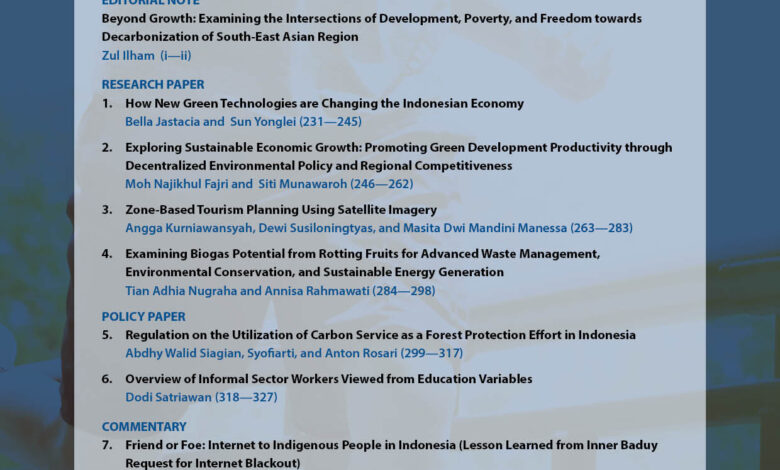
Examining biogas potential from rotting fruits for advanced waste management, environmental conservation, and sustainable energy generation
Revolutionizing Waste Management through Fruit-Based Biogas
A Market Submerged in Surplus
Every day, the Gamping Fruit Market in Yogyakarta serves as a bustling hub of commerce, but this activity leaves behind a silent, rotting footprint. Traditional disposal methods for organic waste are often insufficient, leading to methane emissions and groundwater contamination. However, Koperasi Gemah Ripah has reimagined this burden not as a liability, but as a high-potential feedstock for the future of energy.
The Methodology: A Multidimensional Inquiry
This research dissects the operational success of the Gamping project through a qualitative lens, utilizing:
- Direct Stakeholder Interviews: Gaining ground-level insights from Koperasi Gemah Ripah leadership.
- On-Site Field Observations: Mapping the logistical flow from market stall to digester.
- Cross-Disciplinary Literature Synthesis: Anchoring local findings within the global discourse on anaerobic digestion and renewable energy.
Key Breakthroughs in Sustainable Management
1. The Logistics of Transformation
Koperasi Gemah Ripah has moved beyond simple “cleanup” to a Strategic Waste Lifecycle. By standardizing the collection, rapid transportation, and precision disposal of fruit waste, they ensure that the organic material enters the processing phase while its caloric and chemical potential is at its peak.
2. The Energy Alchemy: Waste to Watts
The centerpiece of this initiative is the conversion of fructose-rich decomposition into biogas. This isn’t just an environmental cleanup; it is a power plant fueled by the discarded. The resulting biogas is successfully converted into electricity, providing a decentralized energy source that reduces the market’s reliance on the traditional grid and fossil fuels.
3. The Power of “Town and Gown” Collaboration
The success of this project hinges on the bridge between industry and academia. The partnership with the Waste Refinery Center at Universitas Gadjah Mada (UGM) provides the technical rigor and innovative refining processes necessary to maximize gas yield. This synergy demonstrates that when local cooperatives and scientific institutions align, the result is a scalable model for urban sustainability.
A Blueprint for the Future
The efforts of Koperasi Gemah Ripah prove that environmental conservation and energy generation are not mutually exclusive. By treating rotting fruit as a resource rather than refuse, this initiative offers a potent antidote to environmental degradation. It stands as a beacon for other regions, proving that the path to a sustainable future may very well be paved with the things we once threw away.
source:
https://journal.pusbindiklatren.bappenas.go.id/lib/jisdep/article/view/312