Carbon Credits are not a “One-Size-Fits-All” Solution
🌍 #Carbon Credits are not a “One-Size-Fits-All” Solution.
The voluntary carbon market is projected to reach $50 Billion by 2030. But as it scales, the complexity grows. To achieve a true net-zero future, we must move beyond simply “buying credits” and start understanding the provenance and impact of different credit types.
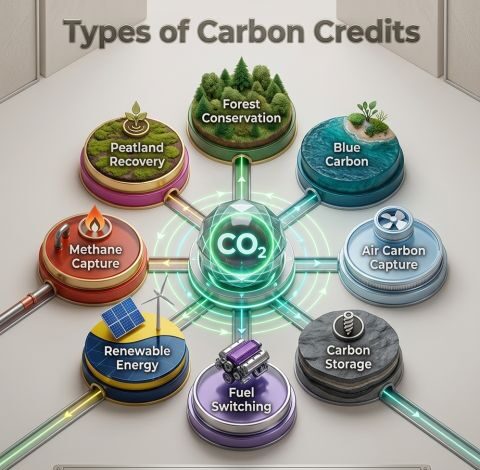
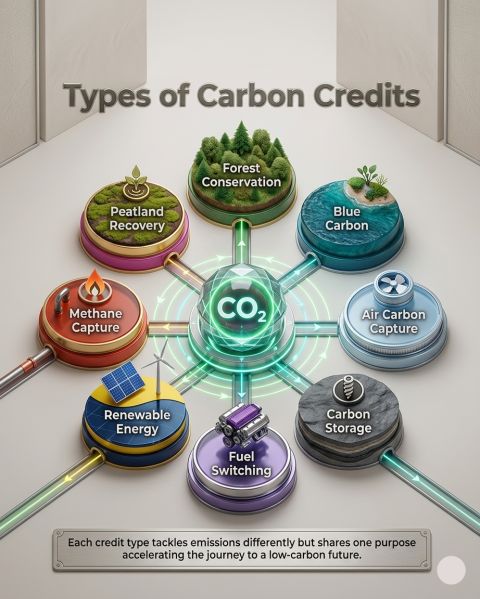
In my work at the intersection of Environmental Safeguards and Financial Engineering, I’ve categorized the ecosystem into 8 critical pathways (as seen in the infographic below):
🔷 Nature-Based Solutions (NBS):
◼️Forest Conservation & Peatland Recovery: Our first line of defense. Protecting existing high-carbon ecosystems is often more efficient than planting new ones.
◼️Blue Carbon: The untapped power of mangroves and seagrasses, which can store up to 10x more carbon than tropical forests.
🔷 Technology-Based Solutions (TBS):
◼️Air Carbon Capture (DAC) & Carbon Storage: Mechanical lungs for our planet. These are critical for handling hard-to-abate sectors.
◼️Methane Capture: Turning a potent greenhouse gas into a resource, bridging the gap between waste management and energy.
🔷 Transition Mechanisms:
◼️Renewable Energy & Fuel Switching: The essential shift in our industrial “DNA” to prevent emissions before they happen.
🔷The Financial Reality:
From a financial econometrics perspective, the volatility and liquidity of these credits vary wildly. A “Blue Carbon” credit carries a different risk profile than a “Renewable Energy” credit. As experts, our job is to ensure that these credits are backed by rigorous Social Safeguards so that local communities benefit as much as the atmosphere does.
Question for the network: As we refine Carbon Capture technology, should we prioritize Nature-Based or Tech-Based credits in corporate portfolios for the next 5 years?
Temukan peta dengan kualitas terbaik untuk gambar peta indonesia lengkap dengan provinsi.