When cities turn roads into green tunnels
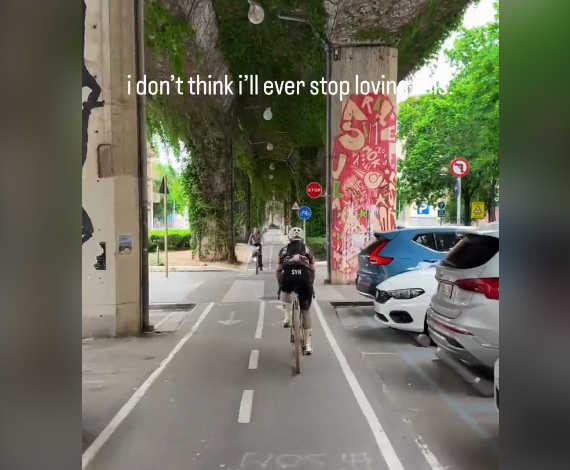
Eco-Mobility: How “Green Tunnels” Are Transforming Urban Transport Space
Across global metropolises, a profound infrastructure shift is quietly replacing gray asphalt with living ecosystems. Urban planners are no longer treating roads purely as pipelines for motorized transit. Instead, they are aggressively reclaiming transport spaces to build Green Corridors transforming everyday commutes into active, climate-resilient journeys.
The Design Shift: Movement Meets Livability
For nearly a century, urban design prioritized the movement of cars, forcing cyclists and pedestrians to navigate heat, noise, and localized pollution. The “Green Tunnel” concept reverses this paradigm by creating multi-layered vegetative arches directly over active transit paths.
This approach transitions cities away from monoculture gray infrastructure toward ecological integration proving that transportation networks can simultaneously serve as urban forests.
The Four Engineering Benefits of Living Infrastructure
Integrating deep tree canopies and structural vegetation into transport corridors yields measurable environmental and psychological returns:
| Benefit | Mechanism | Urban Impact |
| Microclimate Cooling | Evapotranspiration and active solar shading from interlocking branches. | Reduces the Urban Heat Island (UHI) effect along asphalt by up to 2oC to 4oC. |
| Air Quality Scrubbing | Leaf surfaces trap particulate matter ($\text{PM}_{2.5}$ and $\text{PM}_{10}$) and absorb gaseous pollutants. | Creates a localized biological barrier between vehicle emissions and active commuters. |
| Acoustic Buffering | Multi-layered soft vegetation scatters and absorbs high-frequency traffic noise. | Establishes a calmer, lower-stress environment that encourages active transit. |
| Active Safety Barrier | Natural root zones and trunk alignments physically segregate bike lanes from heavy vehicle lanes. | Lowers collision risks while softening the visual landscape of the street. |
The Urban Paradigm:
What appears to be a simple, scenic bike path is actually an advanced climate-adaptation strategy. Green tunnels demonstrate that modern infrastructure does not have to conquer nature it can absorb it.
The future of urban mobility is moving away from stark, exposed concrete and toward integrated, breathing networks. By converting strict transport lanes into thriving green networks, cities ensure that traveling from point A to point B feels less like cutting through an engineered canyon, and more like walking through a living forest.
source: