Paper thin power
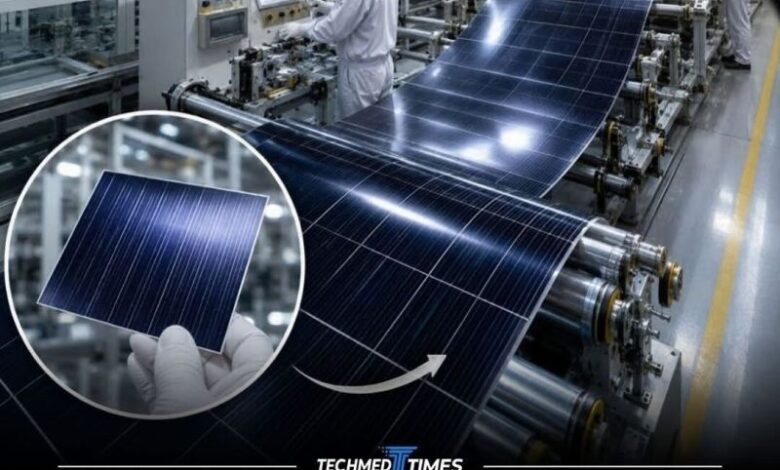
The Technology: Silicon vs. Perovskite
To understand why this is a paradigm shift, we have to look at the structural differences between traditional solar infrastructure and this new generation of cells:
| Attribute | Traditional Silicon Panels | Next-Gen Perovskite Cells |
| Physical Profile | Thick, heavy, rigid, and fragile | Ultra-thin, featherweight, and highly flexible |
| Installation Requirements | Heavy-duty racking, reinforced roofs, flat land | Adhesive backing; can wrap around curves, walls, and glass |
| Manufacturing Process | High-temperature, energy-intensive silicon baking | Low-temperature liquid coating (similar to industrial printing) |
| Land Use Footprint | Massive horizontal acreage required (solar farms) | Seamless integration into existing vertical urban surfaces |
Turning Dense Cities into Vertical Power Plants
For decades, dense urban centers faced a spatial paradox: they consumed the most power but had the least amount of flat land available to generate solar energy. Perovskite completely removes this barrier.
Because these cells can bend and adhere to almost any surface, they effectively turn the concrete jungle into an energy-generating ecosystem by utilizing:
- Skyscraper Facades: Transforming massive vertical glass windows and concrete walls into passive solar collectors.
- Mobility Integration: Wrapping around the curved roofs of electric vehicles, trains, and planes to provide continuous, on-the-go charging.
- Lightweight Urban Infrastructure: Powering bus shelters, streetlights, and temporary structures without structural reinforcements.
[ Sunlight ]
    │
    ▼
┌────────────────────────────────────────┐
│  Protective Top Layer                  │
├────────────────────────────────────────┤
│  Perovskite Absorber Layer (Ultra-Thin)│  ◄── Bends, captures light efficiently
├────────────────────────────────────────┤
│  Flexible Substrate / Adhesive Base    │  ◄── Sticks to windows, cars, or walls
└────────────────────────────────────────┘
Global Impact: democratizing Clean Energy
Beyond aesthetics, the economic and geopolitical implications of printable solar cells are massive:
- Slashing Soft Costs: Traditional solar costs are heavily weighted toward logistics, heavy transport, and complex manual installation. Perovskite rolls can be shipped cheaply and installed rapidly with minimal labor.
- Off-Grid Empowerment: For developing economies and remote regions, paper-thin solar sheets can be rolled out instantly to provide immediate power to schools, medical clinics, and disaster-relief shelters without waiting for a traditional power grid to be built.
The Remaining Hurdles
While the potential is staggering, commercialization is currently facing a final engineering bottleneck: durability. Unlike silicon, which easily lasts 25 years in harsh weather, perovskite structures naturally degrade faster when exposed to moisture, oxygen, and extreme heat.
Japanese researchers are currently hyper-focused on developing advanced chemical encapsulation techniques to seal the cells, ensuring they maintain high efficiency over decades of environmental exposure.
The future of clean energy is moving away from massive, invasive infrastructure projects. Instead, energy generation is becoming an invisible, seamless layer woven directly into the fabrics, vehicles, and buildings of our everyday lives.
source: