Rainwater harvesting systems
The Blue Gold Rush: Why Rainwater Harvesting is the Ultimate Climate Resilience Strategy
Water scarcity is no longer a distant threat it is an imminent operational risk. As groundwater tables plummet and municipal infrastructure strains under the weight of climate volatility, forward-thinking organizations are looking to the sky for a decentralized solution.
Rainwater Harvesting (RWH) has transitioned from an eco-friendly hobby to a multi-million-dollar infrastructure necessity. By capturing, filtering, and storing precipitation on-site instead of letting it escape as destructive stormwater runoff, modern facilities are securing their own water independence.
Here is why this ancient practice is driving the next wave of sustainable engineering and market growth.
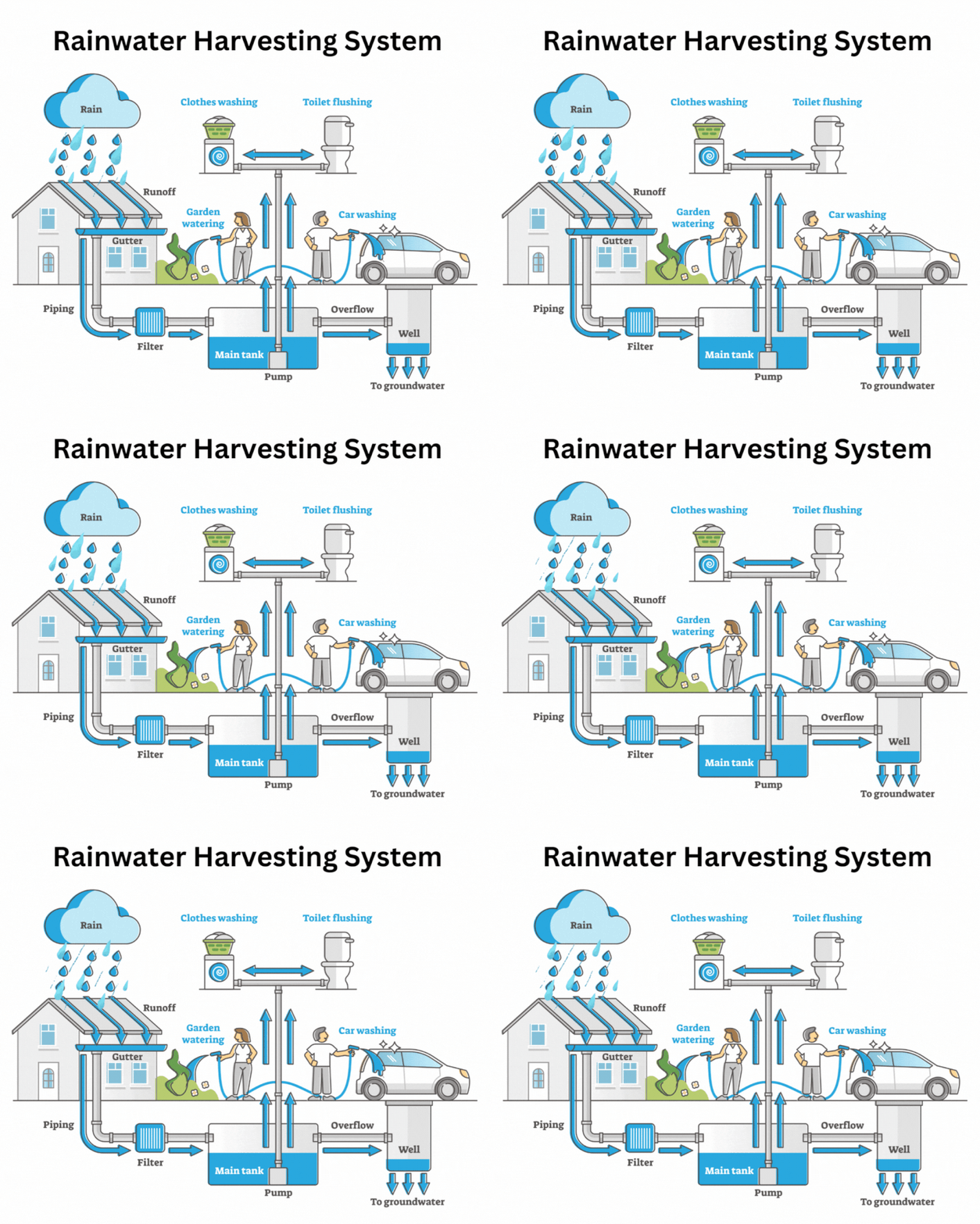
The Mechanics of Modern Rainwater Harvesting
A commercial or residential RWH setup is a highly efficient, closed-loop cycle. While setups can scale from simple rain barrels to massive underground cisterns, every effective system relies on a precise four-stage flow:
[Catchment Area] ➔ [Conveyance System] ➔ [First-Flush Diverter] ➔ [Storage & Filtration]
      ↓                  ↓                       ↓                         ↓
 (Roof/Surface)     (Gutters/Pipes)      (Diverts initial debris)    (Cistern / Treatment)
- The Catchment: The footprint that intercepts rainfall (typically a rooftop, paved surface, or open landscape).
- The Conveyance: The network of gutters and downspouts that safely routes the high-volume flow.
- The First-Flush Diverter: A critical valve mechanism that isolates and discards the initial few gallons of runoff, which carry the highest concentration of surface dust, debris, and pollutants.
- Storage & Distribution: The treated water is held in specialized reservoirs or directed straight into deep wells, shafts, or boreholes to actively recharge depleting local aquifers.
Market Intelligence: A Hyper-Growth Sector
The financial sector is waking up to the reality that water security equals financial security. The global Rainwater Harvesting Market is experiencing unprecedented capital injection, driven by strict building regulations, corporate ESG mandates, and rising municipal water costs.
| Metric | Market Value (USD) | Data Insights & Forecast |
| 2024 Market Size | $1,105.79 Million | Baseline valuation reflecting widespread adoption in commercial builds. |
| 2032 Projected Size | $1,658.82 Million | Driven by a steady 5.2% CAGR (2025–2032) as climate risks escalate. |
| Core Drivers | Regulatory & Financial | Micro-grid water independence, Porter’s Five Forces alignment on resource scarcity, and value-chain optimization. |
The Versatility Factor: Harvested rainwater isn’t just for landscape irrigation. With appropriate modular filtration and UV treatment, this water can safely power industrial cooling systems, livestock operations, indoor HVAC heating loops, and even provide clean, potable drinking water.
Mitigation Meets ROI
Every gallon of rainwater harvested on-site is a gallon your organization does not have to purchase from a strained municipal grid. Furthermore, by keeping that water out of local storm drains, you mitigate the risk of flash flooding and soil erosion around your property assets.
Implementing a comprehensive rainwater harvesting system is no longer just a checkbox for a green building certification—it is a line-item asset that actively inserves your operations against the realities of a water-stressed future.
source:
https://www.linkedin.com/feed/update/urn:li:groupPost:2474261-7472095079273394176/