10 must know carbon terms for climate action
Decoding the Language of Climate Action: 10 Carbon Terms That Actually Matter
In executive boardrooms, regulatory filings, and corporate strategy decks, carbon jargon is everywhere. Yet, for many leaders and sustainability professionals, the landscape remains a maze of buzzwords.
Understanding these terms isn’t just about vocabulary it’s about knowing how to measure risk, evaluate compliance, and drive meaningful strategy. Here is your definitive breakdown of the 10 critical carbon concepts reshaping global business.
1. The Core Metrics: What You Emit vs. How Efficiently You Operate
Before taking action, organizations must establish baseline metrics to understand their exposure.
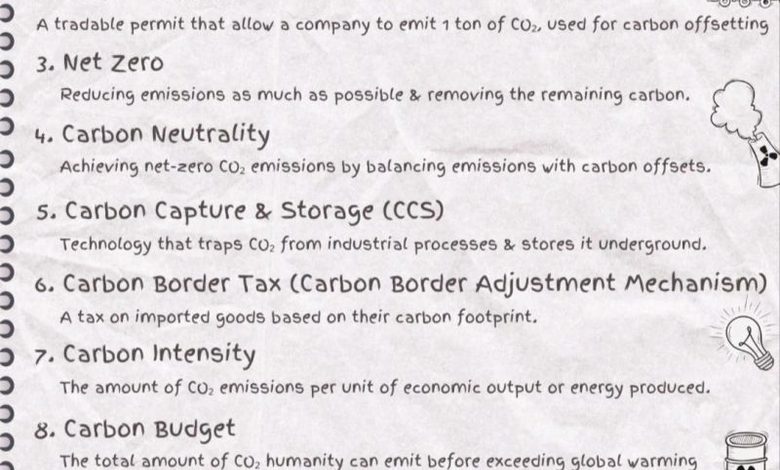
- Carbon Footprint: The absolute volume of greenhouse gases produced directly and indirectly by an individual, product, or organization, measured in metric tonnes of CO₂ equivalent (CO2e).
- Carbon Intensity: The efficiency ratio of those emissions relative to a business metric such as emissions per unit produced, kilometer traveled, or million dollars in revenue.Why it matters: Absolute emissions might rise as a business grows, but falling carbon intensity proves operational efficiency is improving.
2. The Nuance of Pledges: Net Zero vs. Carbon Neutrality
While often used interchangeably, these two standards demand vastly different levels of corporate commitment.
┌─────────────────────────────────────────────────────────────────────────┐
│                          CARBON NEUTRALITY                              │
│  Emissions Level ──────────────────► Compensated 100% via Offsets      │
└─────────────────────────────────────────────────────────────────────────┘
                                   VS
┌─────────────────────────────────────────────────────────────────────────┐
│                              NET ZERO                                   │
│  Emissions Level ──► Deep Reductions (90%+) ──► Neutralize Residuals    │
│                      (Value Chain First)         via Removal Only       │
└─────────────────────────────────────────────────────────────────────────┘
- Carbon Neutrality: Achieving balance by measuring emissions and compensating for them using eligible carbon offsets. It does not strictly require deep internal reductions before offsetting.
- Net Zero: The gold standard. It mandates slashing emissions across Scope 1, 2, and 3 value chains by 90%+ first, utilizing permanent carbon removals solely for the remaining, unavoidable hard-to-abate residual emissions.
3. Markets & Mechanism: How Carbon is Priced and Traded
Financial mechanisms put a literal price tag on carbon, turning environmental performance into bottom-line impact.
| Mechanism | Primary Function | Business Impact |
| Carbon Credits | A verified certificate representing 1 tonne of CO2e reduced or removed from the atmosphere. | Used by companies to offset residual operational emissions. |
| Carbon Markets | Regulated (compliance) or voluntary platforms where credits and allowances are bought and sold. | Establishes market-driven pricing for carbon exposure. |
| CBAM (Carbon Border Adjustment Mechanism) | Tariffs levied on carbon-intensive imported goods based on their embedded emissions. | Protects domestic industries from carbon leakage and levels the regulatory playing field. |
4. Natural & Technological Removal Strategies
Slashing current emissions is step one; actively pulling existing carbon out of the system is step two.
                          [ CARBON REMOVAL PATHWAYS ]
                                       │
            ┌──────────────────────────┴──────────────────────────┐
            ▼                                                     ▼
   NATURAL ECOSYSTEMS                                   TECHNOLOGICAL SOLS
  ┌─────────────────────────────────┐                  ┌────────────────────┐
  │ 🌿 Green Carbon:                │                  │ 🏭 CCS & DAC:      │
  │ Terrestrial forests, soils, and │                  │ Capturing CO₂ from │
  │ inland vegetation storage.      │                  │ industrial stacks  │
  │                                 │                  │ or direct air to   │
  │ 🌊 Blue Carbon:                 │                  │ trap underground.  │
  │ Coastal mangroves, salt marshes,│                  │                    │
  │ and ocean seagrass beds.        │                  │                    │
  └─────────────────────────────────┘                  └────────────────────┘
5. The Boundaries: The Global Carbon Budget
Underpinning every corporate pledge and international policy is the Global Carbon Budget the absolute limit of total greenhouse gases humanity can emit while maintaining a reasonable chance of staying below global temperature thresholds (1.5oC or 2oC).
Every ton of carbon emitted anywhere reduces this shared finite balance.
Connecting the Dots: The Executive Decision Framework
To bring these 10 terms together into a coherent strategy, view them as a step-by-step operational loop:
- Calculate your absolute Carbon Footprint to understand overall impact.
- Benchmark your Carbon Intensity to identify operational inefficiencies.
- Pave a Path: Target Net Zero by driving down internal emissions before relying on external balancing.
- Deploy Solutions: Invest in Green/Blue Carbon projects or CCS technology.
- Leverage Financial Tools: Trade within Carbon Markets, navigate CBAM regulations, and purchase verified Carbon Credits to manage remaining liabilities within global Carbon Budgets.
source:
https://lnkd.in/p/eGuN9PPi