
Turning Banana Waste Into Opportunity
Turning Banana Waste Into Opportunity
What if agricultural waste could become a valuable industrial resource?
Bananas are grown on a massive scale worldwide, but the opportunity extends far beyond the fruit. Leaves, pseudostems and peels can all serve as raw materials for emerging circular-economy industries.
Research suggests that around 4 tonnes of residual biomass may be generated for every tonne of bananas harvested, although the amount varies by production system.
🌿 Here’s where the opportunity lies:
🧵 Pseudostems: Natural fibres for textiles, paper and composite materials.
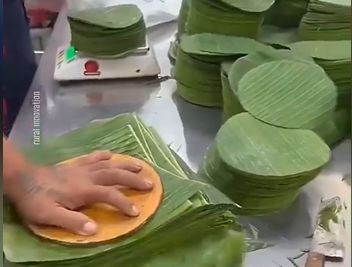
📦 Banana leaves: Potential alternatives for certain disposable food-wrapping applications.
♻️ Peels: Feedstocks for compost, pectin extraction and bio-based materials.
⚡ Residual biomass: Potential inputs for bioenergy and biochar production.
The economic opportunity goes beyond waste reduction.
Turning banana residues into marketable products could help diversify farmers’ income, reduce reliance on virgin raw materials and create new value chains connecting agriculture with manufacturing.
But success depends on efficient collection, affordable processing and proving that the resulting products deliver genuine environmental benefits.
This is the promise of a circular bioeconomy: designing systems where materials that were once discarded become valuable resources.
The next breakthrough in sustainable manufacturing may already be growing in our fields.


