
Circular Economy Transformation
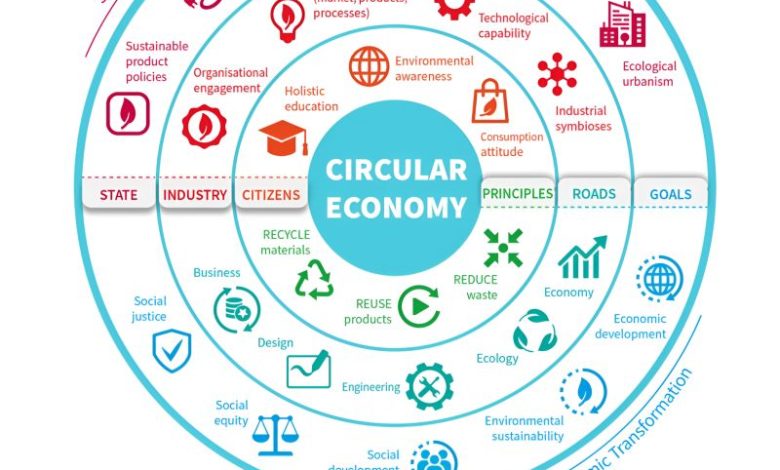
The circular economy represents a fundamental shift in how economic activity is structured, aiming to keep materials in continuous use and to regenerate natural systems.
This approach goes beyond resource management, striving to tackle climate change, biodiversity loss, waste, and pollution by decoupling economic activity from the consumption of finite resources. The goal is to create a system where waste is eliminated, products are maintained, reused, and recycled, and nature is restored.
Systemic interventions are critical to driving this transformation. Policies focused on waste management, sustainable energy, and eco-innovations play a vital role in establishing the foundations of a circular economy. These interventions are necessary to create the infrastructure and regulatory frameworks that support circular practices across various sectors.
Stakeholders, including states, industries, and citizens, must collaborate to bring about this shift. States implement policies that incentivize circular practices, industries innovate and adapt their operations to align with circular principles, and citizens participate through conscious consumption and responsible waste management. Each group’s engagement is essential in ensuring that circular systems are adopted and maintained.
The principles underlying a circular economy emphasize the importance of keeping products and materials in circulation. Processes like maintenance, reuse, refurbishment, remanufacture, recycling, and composting are at the core of this approach. These principles enable the continuous flow of materials, reducing the need for new resources and minimizing environmental impact.
The road to realizing a circular economy also includes raising environmental awareness and building technological capability. Industrial symbiosis, where one industry’s byproducts are used as inputs for another, is a prime example of how circular practices can be embedded within existing systems. Education and public awareness campaigns further ensure that individuals and communities understand and support circular initiatives.
Achieving the goals of a circular economy requires a holistic approach that integrates economic development with environmental sustainability and social equity. By focusing on systemic change, stakeholder collaboration, and the continuous circulation of materials, the circular economy can help create a resilient and sustainable future.
source :


