
Fact Sheet: Plastics and the Triple Planetary Crisis
Scientific evidence demonstrates that plastics and associated chemicals (hereafter referred to as plastics), including some bio-based plastics, are destabilizing the biosphere, disrupting basic Earth system processes, harming the natural environment and living organisms including humans, and threatening the right to a clean, healthy, and sustainable environment (UNHCR A/HRC/RES/48/13).
What is the Triple Planetary Crisis?
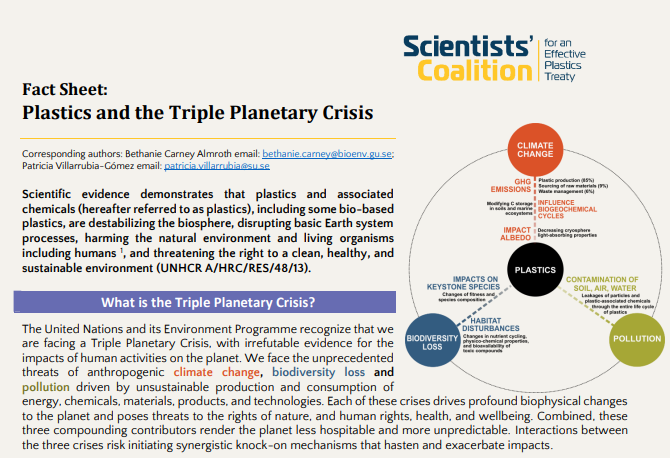
The United Nations and its Environment Programme recognize that we are facing a Triple Planetary Crisis, with irrefutable evidence for the impacts of human activities on the planet. We face the unprecedented
threats of anthropogenic climate change, biodiversity loss and pollution driven by unsustainable production and consumption of energy, chemicals, materials, products, and technologies. Each of these crises drives profound biophysical changes to the planet and poses threats to the rights of nature, and human rights, health, and wellbeing. Combined, these three compounding contributors render the planet less hospitable and more unpredictable. Interactions between the three crises risk initiating synergistic knock-on mechanisms that hasten and exacerbate impacts.
How do plastics cause pollution?
Plastics are a source of pollution throughout their entire life cycle, with releases to air, land, and water at all stages globally. Plastics are chemicals, many known to be substances of concern. This pollution begins at the extraction of feedstocks destined for the production of plastics (i.e., fossil fuels or biobased carbon sources), with releases of greenhouse gases (GHG), fracking water, oil spills, chemicals, fertilizers, and pesticides. At polymer and production stages, chemicals and micro and nano plastics (MNPs) are released, including monomers, polymers, additives, pellets, flakes, powders, and fragments. Spills and releases also occur during transportation. During commercial, industrial and consumer use phases, plastics are intentionally and unintentionally released, e.g., via use of fishing gear, agricultural plastics; and releases and emissions of chemicals and MNPs from plastics in the environment. Further releases occur during waste management including recycling. In addition, plastics weather constantly, making these smaller particles in permanent movement, a difficult target to assess with small particles shed and chemicals liberated. Plastics pollution mitigation and remediation of habitats can also result in releases of MNPs, as well as monomers, polymers, and combined with other intentionally and unintentionally added chemicals.
Plastics pollution impacts environmental and human health 8 via daily exposure, multiple exposure routes (e.g. contaminated food or inhalation of particles), and cumulate impacts.
How are plastics connected to climate change?
Ninety-nine % of plastics are produced from fossil feedstocks and with large volumes of fossil energy. In 2015, plastics caused 4.5% of global GHG emissions, and its global carbon footprint is expected to increase at the same speed as projected plastics production. GHG emissions (e.g., carbon dioxide and methane) occur at all stages of the plastics life cycle, from extraction and transportation of the raw materials to polymer and chemical production, plastic product conversion, energy inputs into recycling, waste incineration and uncontrolled burning, plastics removal, and remediation of contaminated ecosystems. and environmental degradation 10. Most GHG emissions occur in the early life stages of sourcing raw materials (9%) and plastic production (85%), and 6% of emissions occur during waste management. The amount of plastics in municipal solid waste streams is rapidly increasing, as are GHG emissions from waste management 11. Furthermore, there is evidence that plastics may also affect climate via indirect mechanisms. Common types of microplastics, could impact albedo (or fraction of solar radiation reflected by a surface) and melting of the cryosphere via their light-absorbing properties. MNPs influence biogeochemical cycles in aquatic and terrestrial environments, modifying the potential C storage in soils and aquatic ecosystems. Not only do plastics affect climate, but climate change can affect the fate of plastics. Extreme weather events are significantly increasing plastics pollution in all ecosystems.
source :


