Air polluted cities
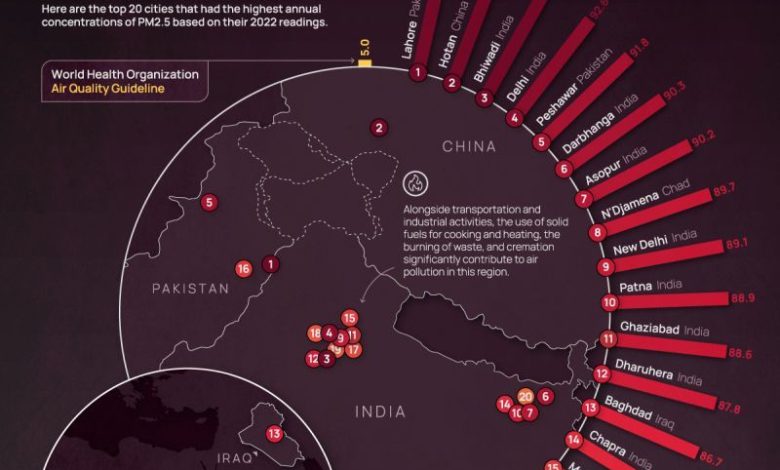
This powerful infographic by Visual Capitalist presents a stark look at the cities battling some of the highest air pollution levels worldwide. Titled “The 20 Most Polluted Cities on Earth,” it highlights the critical problem of PM2.5, particulate matter small enough to penetrate deep into the lungs, bloodstream, and organs, wreaking havoc on human health. For residents of these cities, many of which are located in South Asia, breathing clean air has become a rare luxury rather than a basic right.
The data, compiled from over 7,323 cities equipped with ground-level air monitoring stations, paints a concerning picture. At the top of the list is Lahore, Pakistan, followed by Hotan, China, and Bhiwadi, India. Each city on the list exceeds the World Health Organization’s air quality guideline for PM2.5—a warning sign that pollution has reached levels harmful to human health. Yet, these pollution readings represent more than mere numbers; they tell a story of millions of people living daily with polluted air.
Behind these alarming statistics are various factors contributing to high pollution levels. In rapidly urbanizing regions, emissions from transportation and industry, the use of solid fuels for cooking and heating, open burning of waste, and cremation all contribute to the toxic cocktail in the air. For some places, the impact of these sources is compounded by environmental conditions: Chad, for instance, experienced a staggering 182% increase in PM2.5 levels in 2022, primarily due to severe dust storms.
The human cost of air pollution is immense. PM2.5 pollution is linked to respiratory and cardiovascular diseases, reduced lung function, and premature death. It affects vulnerable populations disproportionately—children, the elderly, and those with preexisting health conditions are particularly at risk.
Yet, awareness and knowledge are the first steps toward change. For cities like Lahore and Bhiwadi, addressing air quality will require concerted efforts, including stronger regulations on industrial emissions, incentivizing clean transportation, and promoting renewable energy sources for cooking and heating. Meanwhile, raising awareness of the dangers of open burning and waste management is vital to mobilizing communities toward cleaner practices.
This infographic serves not just as an informative piece but as a call to action. As air pollution continues to escalate, the need for global collaboration and effective solutions has never been more pressing.
source :