A Land Indicator
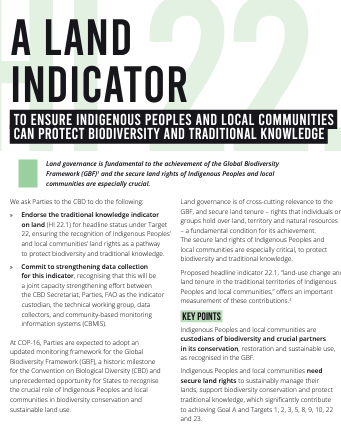
The call to endorse the land indicator at COP16 underscores a critical opportunity to strengthen the link between land tenure, biodiversity conservation, and the rights of Indigenous Peoples and local communities (IPLCs). Land governance is a cornerstone of biodiversity preservation, as it directly impacts how natural resources are managed, conserved, and restored. By formally integrating land tenure indicators into the Global Biodiversity Framework at the upcoming United Nations Biodiversity Conference (CBD COP16), we can pave the way for sustainable and inclusive environmental stewardship.
Why Land Tenure Matters for Biodiversity
Land tenure refers to the legal or customary rights that individuals or communities have over land, including the rights to use, manage, and govern the land and its resources. Secure land tenure for Indigenous Peoples and local communities is essential for several reasons:
- Protecting Biodiversity: Indigenous and local communities have a long history of managing ecosystems sustainably. They often inhabit areas with rich biodiversity, and their traditional knowledge plays a vital role in conserving those ecosystems. Secure land rights empower these communities to continue their stewardship and safeguard critical habitats.
- Preventing Deforestation and Land Degradation: When IPLCs have secure land rights, they are more likely to engage in long-term sustainable land use practices. Research shows that areas under Indigenous control often experience lower rates of deforestation, degradation, and biodiversity loss.
- Empowering Communities: Recognizing and formalizing the land rights of Indigenous Peoples and local communities not only helps protect biodiversity but also ensures social equity. It provides these groups with the legal standing to defend their territories from external pressures such as mining, logging, and agriculture.
The Role of the Land Indicator in the Global Biodiversity Framework
At COP16, there is a push to integrate the land indicator (HI 22.1) under Target 22 of the Global Biodiversity Framework. This indicator focuses on traditional knowledge and recognizes Indigenous land tenure as a crucial element in biodiversity conservation. By endorsing this indicator, Parties to the CBD can ensure that:
- Indigenous land rights are protected as part of global biodiversity commitments.
- The contribution of traditional knowledge in managing ecosystems is fully acknowledged.
- Monitoring frameworks are equipped to measure progress in securing land tenure and its impact on biodiversity outcomes.
The Call to Action at COP16
We call on all Parties to the CBD to endorse the land indicator at COP16 and elevate its status to a headline indicator under Target 22. This endorsement will be a critical step in recognizing the central role of land tenure in achieving the CBD’s broader biodiversity goals. By embedding land governance into the Global Biodiversity Framework, we can ensure that the rights of Indigenous Peoples and local communities are respected, that biodiversity is conserved, and that sustainable land use practices continue to flourish.
Incorporating land tenure into the Convention on Biological Diversity’s monitoring framework is not just about protecting land—it’s about protecting ecosystems, empowering communities, and fostering a healthier planet for all.
source :