
Carbon market compliance vs voluntary
The Climate Divide: Why Compliance Is the Floor, Not the Ceiling
Carbon credits are the currency of climate action, but their power depends entirely on the market that backs them. If we’re going to solve the climate crisis, we need to understand the fundamental difference between simply playing by the rules and truly changing the game.
It boils down to the difference between legal necessity and moral ambition: Compliance versus Voluntary action.
Compliance: The Hard Floor of Accountability
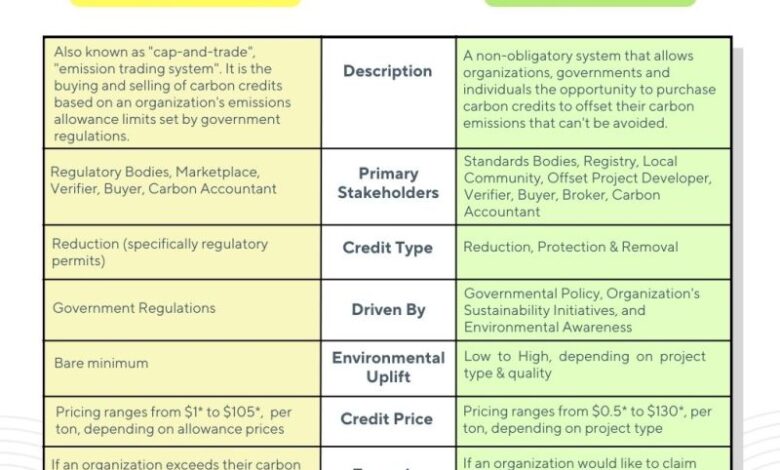
Compliance markets, often called “cap-and-trade” systems, are the climate regulators’ hammer. These markets are government-mandated and built on a simple, legal imperative: meet your emissions limit, or pay the price.
- The Mechanism: Regulators set a “cap” on total pollution. Companies that pollute more than their allotted allowance must buy credits (or allowances) from companies that polluted less.
- The Drive: Legal necessity. It forces polluters to meet the absolute minimum legal obligation. It’s effective at controlling total emissions within a jurisdiction, but its primary function is accountability, not ambition.
- The Price: Driven by allowance scarcity, prices vary wildly, ranging from $$$1 to $$$105 per tonne—a reflection of the penalty for exceeding the limit.
Voluntary: The Engine of Ambition
The Voluntary Carbon Market (VCM) is where genuine climate leadership is forged. Here, action is driven not by law, but by corporate vision, sustainability goals, and brand responsibility.
- The Mechanism: Businesses and individuals voluntarily purchase credits from projects that actively reduce, protect, or remove carbon from the atmosphere. These projects include funding large-scale forestry, building new renewables, and distributing clean cookstoves.
- The Drive: Innovation and ambition. The VCM funds impact. It enables companies to go beyond their scope of operations and invest directly in high-impact environmental and social projects worldwide.
- The Price: Highly variable ($$$0.5 to $$$130 per tonne), reflecting the quality and co-benefits of the project the harder the project is to implement (like carbon removal), the higher the price.
The Verdict on Impact
Compliance markets are essential because they ensure that the biggest polluters are held legally accountable. They put a hard cap on pollution.
However, the VCM is the catalyst for real-world impact. It is the market that:
- Unlocks Innovation: It provides the capital necessary to pioneer new climate solutions (like direct air capture) and scale up effective natural solutions (like forest and blue carbon protection).
- Delivers Co-Benefits: It funds projects that directly uplift local communities, enhance biodiversity, and promote equitable transitions in the Global South.
- Demands Leadership: It separates those who merely comply from those who truly embrace the challenge of climate stabilization.
The planet doesn’t reward the bare minimum. While compliance sets the floor, the Voluntary Carbon Market drives the true climate impact by funding the future we need.
source:


