Circular Economy – From Principles to Practice (Part 2)
Earlier this week, I shared Part 1 of this series on the the overview of circular economy and the key principles.
We explored the core principles:
✅ Eliminate waste before it exists
✅ Keep materials in use
✅ Regenerate nature
But understanding the “what” is just the beginning.
Today in Part 2, we explore the “how.”
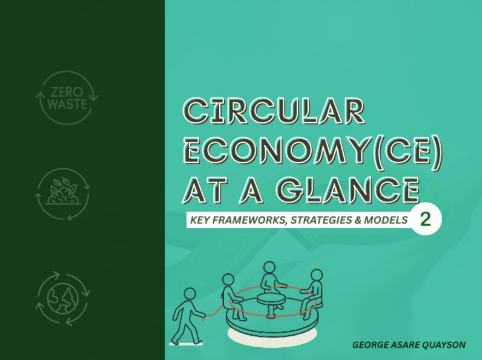
🔍 “Circular Economy at a Glance – Strategies & Structures” breaks down the key elements that move circularity from theory into action:
🧩 Frameworks like:
10 R Hierarchy – from Refuse to Recover
ReSOLVE – Regenerate, Share, Optimize, Loop, Virtualize, Exchange
Butterfly Diagram – Biological and technical cycles in motion
🛠 Strategies such as:
Product-as-a-Service (PaaS)
Design for Disassembly
Reverse Logistics
📊 Models like:
Closed-loop supply chains
Remanufacturing and take-back systems
Industrial symbiosis
📜 Regulations pushing the transition:
EU Green Deal
Circular Economy Action Plan (CEAP)
ESPR with the Digital Product Passport
CSRD and ESRS E5 on circular reporting
🔑 Takeaway:
Circularity isn’t just better recycling—it’s a systems transformation.
One that’s backed by design thinking, business innovation, and regulatory frameworks.
👉 Stay tuned for Part 3, where we’ll explore:
– Social and economic dimensions
– Metrics and impact assessment
– Circular business in action
Source: