Circular Economy Is More Than Recycling
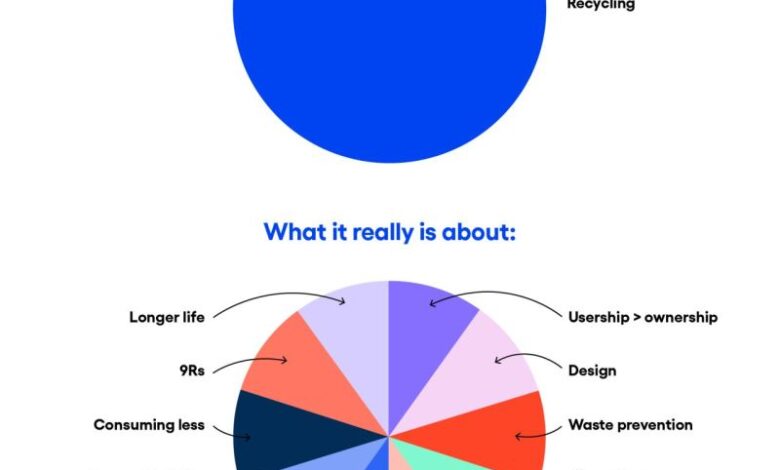
Many people think the circular economy is simply about recycling. In reality, recycling is only a small piece of a much bigger system designed to eliminate waste and keep resources in use for as long as possible.
The true circular economy begins long before a product becomes waste. It starts with design—creating products that last longer, are easier to repair, and can be reused or remanufactured. Smart design reduces the need for constant extraction of new raw materials and lowers environmental impact from the start.
Another key idea is waste prevention. Instead of managing waste after it is created, circular systems aim to prevent it entirely. Businesses redesign production processes, packaging, and supply chains to minimize material loss and maximize efficiency.
Circularity also introduces new business models. Concepts like product-as-a-service, leasing, and sharing platforms shift the focus from ownership to usership. This approach encourages companies to build durable products and maintain them over time.
Supply chains also become closed loops, where materials from used products are recovered and fed back into manufacturing. Through reverse logistics and take-back systems, companies collect products at the end of their life and return valuable materials into production cycles.
Another important element is consuming less. Circular economies encourage mindful consumption, longer product lifetimes, and repair culture rather than constant replacement.
Frameworks such as the 9Rs—Refuse, Rethink, Reduce, Reuse, Repair, Refurbish, Remanufacture, Repurpose, and Recycle—illustrate how recycling is actually the last option, not the first.
A circular economy is therefore not just about managing waste. It is about redesigning how products are created, used, and recovered to build an economic system where materials never truly become waste.