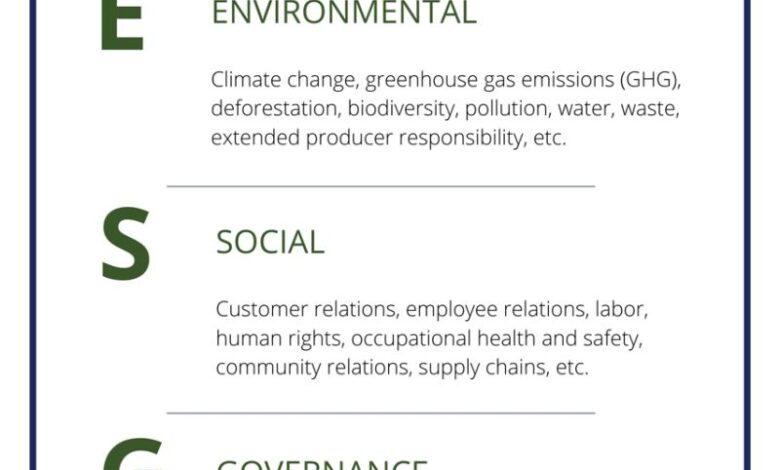
Common example of ESG Issues
Beyond the Buzzword: ESG as the Blueprint for Business Resilience
ESG Environmental, Social, and Governance is not just a reporting standard; it is the fundamental operating philosophy that separates durable, future ready companies from the rest. It is the clearest blueprint for how a business creates lasting value while honoring its commitments to people and the planet.
Embrace these pillars, and you don’t merely comply you forge a powerful competitive edge.
The Three Lenses of Sustainable Value Creation
E: Environmental Stewardship of Our Shared Home
The “E” defines a company’s relationship with the physical world. This is where operational risk meets planetary survival. A company’s future value is directly tied to its ability to minimize its ecological footprint.
- Key Issues: Climate change (decarbonization strategy), carbon emissions and energy efficiency, water stress (usage and waste), pollution control, and protecting biodiversity.
- The Strategic Edge: By minimizing resource consumption and adopting circular practices, companies reduce operational costs, stabilize supply chains against climate volatility, and future-proof themselves against rising carbon taxes.
S: Social The Human Capital and Community Contract
The “S” is the measure of a company’s commitment to its human ecosystem. This sphere reflects the quality of relationships with employees, customers, suppliers, and the communities it serves. People are not just inputs; they are the engine of innovation.
- Key Issues: Employee health and safety, diversity and inclusion, fair labor standards and human rights in the supply chain, community engagement, and customer data protection.
- The Strategic Edge: Prioritizing the Social pillar attracts and retains top talent, builds brand loyalty, and ensures the license to operate in increasingly aware global markets. A strong “S” mitigates reputational crises.
G: Governance The Engine of Trust and Accountability
The “G” is the bedrock the internal system of rules, practices, and procedures that govern how a company is directed and controlled. It is the ethical infrastructure that guarantees the long-term success of the other two pillars.
- Key Issues: Board diversity and independence, executive compensation transparency, anti-corruption and bribery policies, shareholder rights, and clear business ethics.
- The Strategic Edge: Robust governance builds investor confidence and market trust the true currency of the modern enterprise. It ensures resources are managed ethically, reducing legal and financial exposure.
ESG isn’t a cost center; it’s a value amplifier. When done right, it drives innovation, unlocks new capital, and ensures the business model is resilient enough to thrive decades from now.