
Cities for all ages
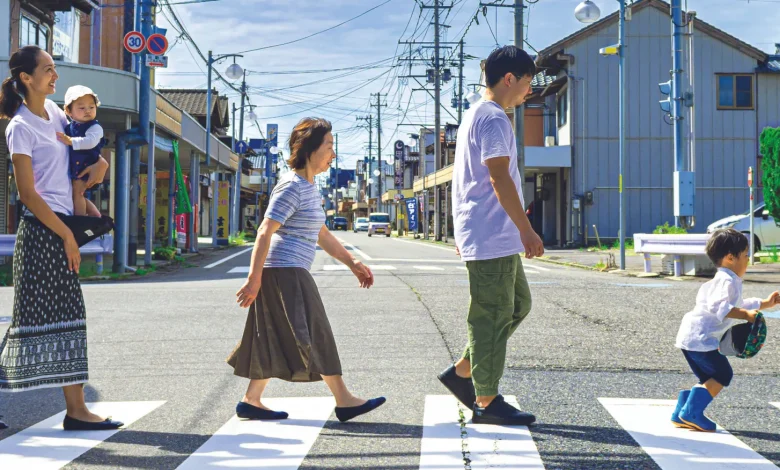
While cities across the OECD typically have younger populations than in rural areas, they are ageing rapidly. Between 2000 and 2022, the number of people aged 65 and older per 100 working-age (20-64 years old) people increased in urban agglomerations of all 35 OECD member countries with available data. This share is projected to rise from 20.9% in 2020 to 27.9% by 2040 on average across 29 OECD countries. Meanwhile, many large cities continue to grow and attract the young.
Cities that fail to be age‑inclusive, i.e. those that do not address the needs of people of all ages in urban planning and policies, are likely to face significant social and economic costs. These include higher risks of poor health, loneliness, isolation and poverty, and associated higher public expenditures for older residents, reduced educational and social opportunities for children and reduced attractiveness for the young, with consequences for the labour market and productivity growth.
By embodying an age-inclusive approach in urban policy making, governments can promote access to opportunities for residents at every stage of life, but also advance on broader goals such as competitiveness, environmental sustainability and social cohesion, delivering many win-win outcomes. Efforts to create cities for all ages are already underway in many cities, focusing on three key policy areas:
- Urban design and land use planning to enhance access to opportunities, services and jobs and to improve safety, sustainability, equity and well-being outcomes, including through better transport. Cities like Barranquilla and Bogotá, Colombia, are redesigning urban space with mixed‑use development and expanded green spaces, including for children and older adults.
- Targeted housing provision to help young people and parents find affordable homes near schools, work, services and cultural hubs and enable older adults to age in place. Cities are redeveloping brownfield sites for age-specific needs, like co-housing for residents under 35 (Bologna, Italy) and senior supportive housing (New Orleans, United States), optimising housing provision through “rightsizing” (Cork, Ireland) and intergenerational house-sharing initiatives (Baltimore, United States), and subsidising the renovation of old flats designed for students (Greece) and older adults (MaPrimeAdapt’ in France) to help specific age groups attain affordable and accessible urban housing.
- Strengthening the local economy by integrating young and older adults as workers and consumers, supporting job creation and cultural attractiveness. Providing older adults with reskilling programmes, as in Greater Manchester (United Kingdom), extends workforce participation and reduces health costs. Investing in digital health solutions, including for older adults such as in Barcelona, Spain, can stimulate the “silver economy” and create jobs for younger people. Cities such as Kusatsu, Japan, focus on quality tertiary education to retain young talent, while Mannheim, Germany, promotes nightlife and cultural spaces to attract working-age residents and boost economic growth.
source:
https://www.oecd.org/en/publications/cities-for-all-ages_f0c8fefa-en.html


